In London I took WSET Level 1 and 2 Wine Courses and passed with distinction, so now this is a wine blog. We’ve been drinking a lot of nice wine here, going on some tours, and slowly figuring out what we are drinking.
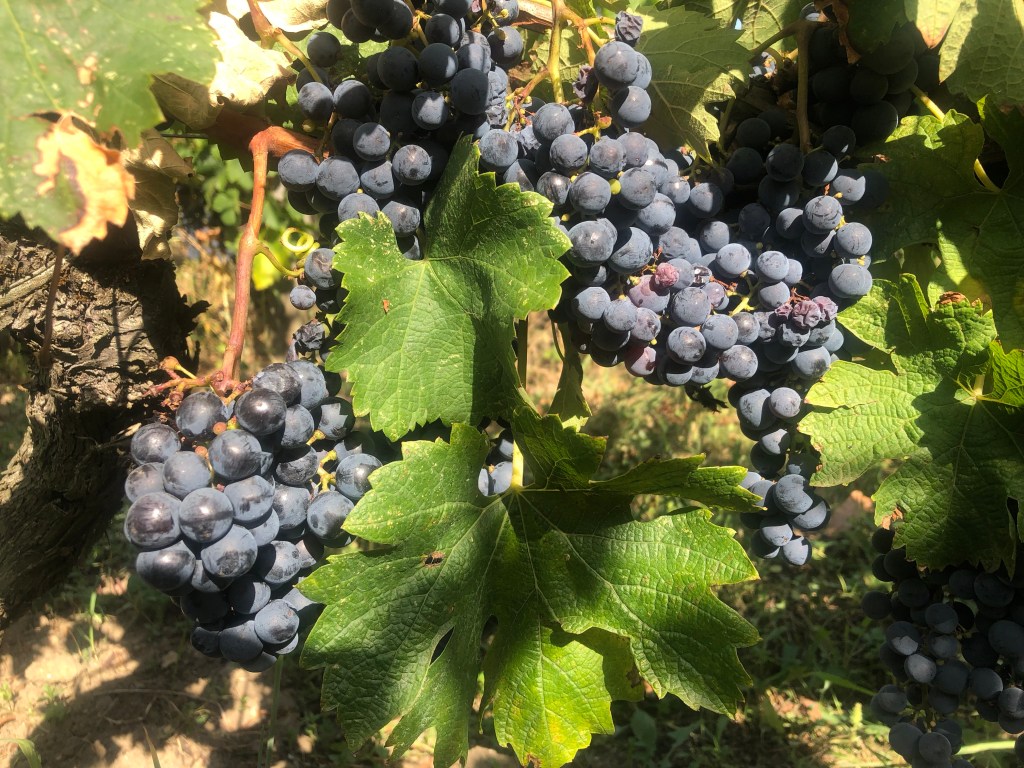
Over the last few weeks we’ve visited wineries on our own, and took a bike tour to visit a couple others. We got lucky on timing and saw the bottling of last year’s vintage at Chateau Bernateau, and picking and sorting at Chateau Franc Mayne. Usually all that is happening at wineries is aging in barrels, so it’s fun to see production in action. We also ate lots of Merlot grapes off the vine, which were delicious! 2019 is going to be a great vintage, I can tell.
Here are some Bordeaux basics . . .
Bordeaux is by far the largest wine region in France. They grow black and white grapes, but are more famous in the U.S. for red wine. Bordeaux has a “temperate ocean climate”. I’m not totally sure what that means, but we’ve been here most of September, and it has been in the high 80s most of the time. It has also rained a lot. There is a lot of limestone, and sandy/gravely soil, which the winemakers like.
The black grape varieties, in order of most widely grown to least, are Merlot (by far the most prominent), Cabernet Sauvignon, Cabernet Franc, Petit Verdot, Malbec, and Carménère. On the white varietal side, Sauvignon Blanc and Semillon are planted about equally, and together make up over 90% of the white varietals planted.
With all these varietals they make dry red wines, rose, dry white wines, sparkling wines, and sweet white wines (Sauternes). Wines are nearly always blends. It’s rare to have a wine that is made of a single grape. (But we happen to have one in our nice AirBnb wine fridge that we are excited about. It’s 100% Cabernet Franc from a Saint-Émilion Grand Cru.) They really like to age red wine here, and a wine from a few years ago may not be very fun to drink. It needs to age for like 10+ years to mellow out the tannins. The whites can mostly be consumed right away.
The wine region is based around an estuary where the Garonne and Dordogne rivers meet. There are basically three large wine growing areas – Left Bank, Right Bank, and Entre-Deux-Mers. These are all broken up into many appellations. Here’s a good map.
The Left Bank
The Left Bank wines are dominated by Cabernet Sauvignon. If you like California Cabs, this is as close as you are going to get. The wines are medium to full-bodied, and are described as having high acid and high tannin levels. But, I think if you are used to drinking wine from California, you will think they are much smoother – meaning less tannins and acid – than you are used to, and with less pronounced flavors.
There is a truly bizarre quality classification for wines from the Left Bank. In 1855, there was a classification, where the wines were ranked based on the Chateau’s reputation from first to fifth growth (“crus”). In other words, the wine wasn’t classified by the terroir or appellation, but the classification is directly connected to a chateau. The classification has never materially changed, even as chateaux have changed ownership or expanded their vineyards. So if a chateau was classified as Premier Crus (first growth), back in 1855, it still has that classification today, and it does not matter if the wine is now terrible. There are only five Premier Crus, btw.
Anyway, its pretty confusing. If you buy wines from these AOCs (Appellation d’Origine Contrôlée) you should be in good shape – Haut-Médoc, Paulliac, and Margaux. These are premium appellations.
If a bottle is labeled Bordeaux AC or Bordeaux Supérieur AC, it is most likely produced outside of a prestigious appellation (or it would have the appellation name on the bottle), or not according to the strict rules of the prestigious appellations. They are good, lower-priced wines.
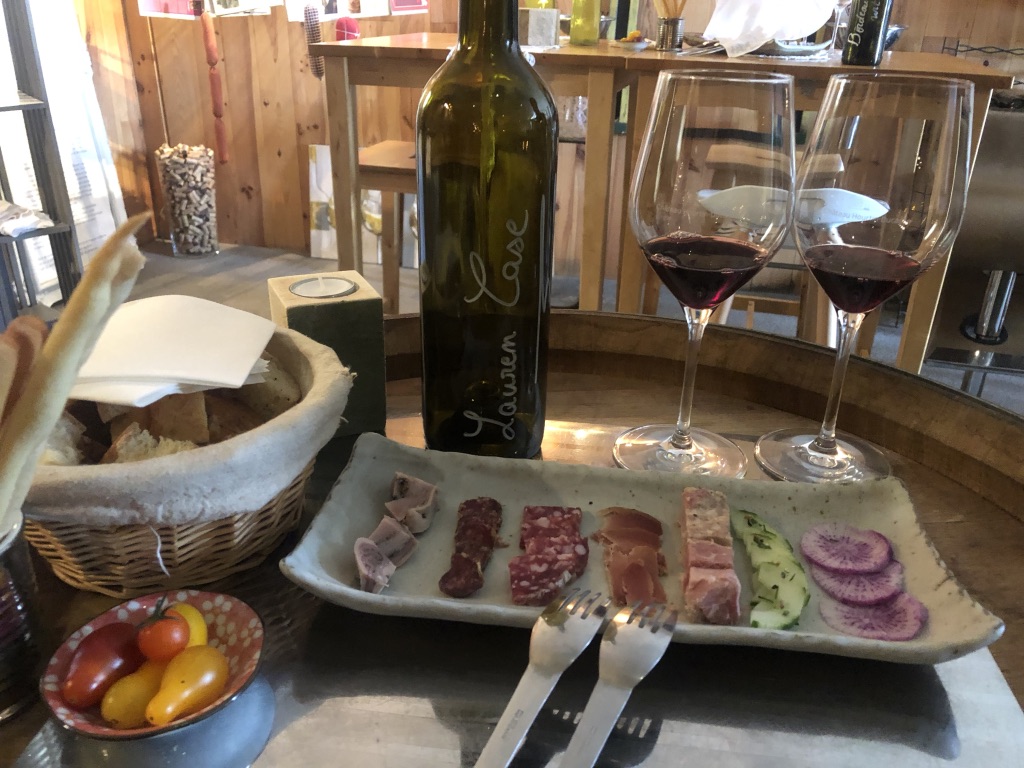
Right Bank
Right Bank wines are Merlot dominant. They tend to be “softer” in style than Left Bank wines. They have medium acids, tannins, and have red fruit characteristics (rather than black fruit like over on the Left Bank). There is really thick limestone underneath the soil here, which apparently leads to good wine.
The best wines come from St. Emilion, a charming and very old town about 45 minutes outside Bordeaux. And the best appellations within St. Emilion are Saint-Emilion Grand Cru AC and Pomeral AC.
We visited St. Emilion twice, once on a bike tour, and a second time to check out a few more vineyards. We really enjoyed it. It is a UNESCO world heritage site. It was named after a monk who, in the 700s, lived here for 17 years as a hermit in a limestone cave.
The limestone is a pretty soft yellow color and is a good building material, so there are quarries all over the area and the whole region has buildings made from the stone. Many chateaux have underground limestone cellars. During the french revolution, the aristocrats would hide in the quarries and cellars. In one cellar we visited, there is a drawing from the revolutionary period of a woman’s severed head! Lots of interesting history in these parts.
St. Emilion has its own classification system, that is different from the 1855 classification. The St. Emilion classification began in 1955, and is revised every 10 years. If you are a lucky landowner/winemaker, you can get a Grand Crus Classe or, even better, Premier Cru Classe classification. Pomerol doesn’t classify its wines but it is a premium appellation, so just go ahead and drink anything from there.
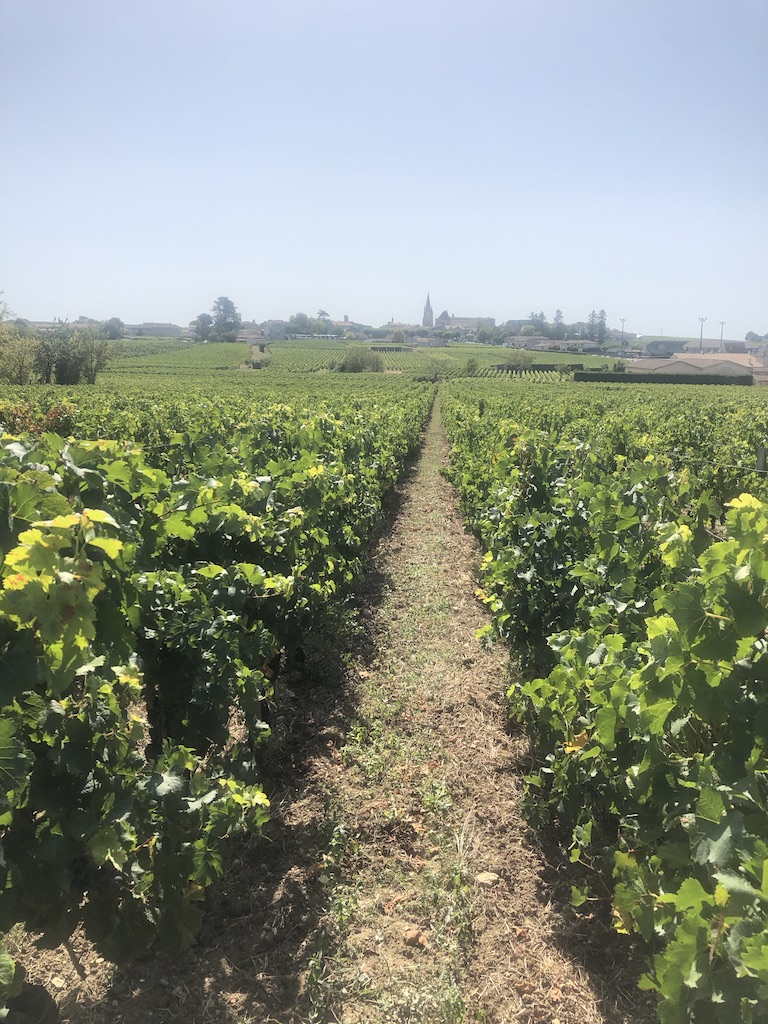
St. Emilion waaaay in the background. 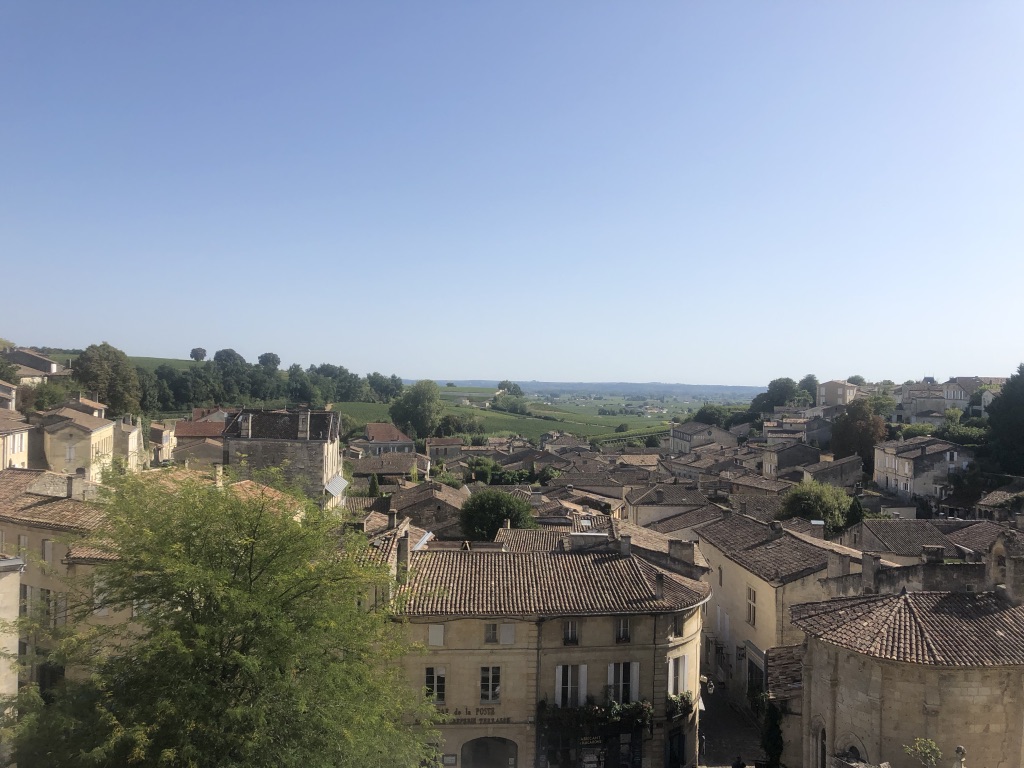
View overlooking St. Emilion. 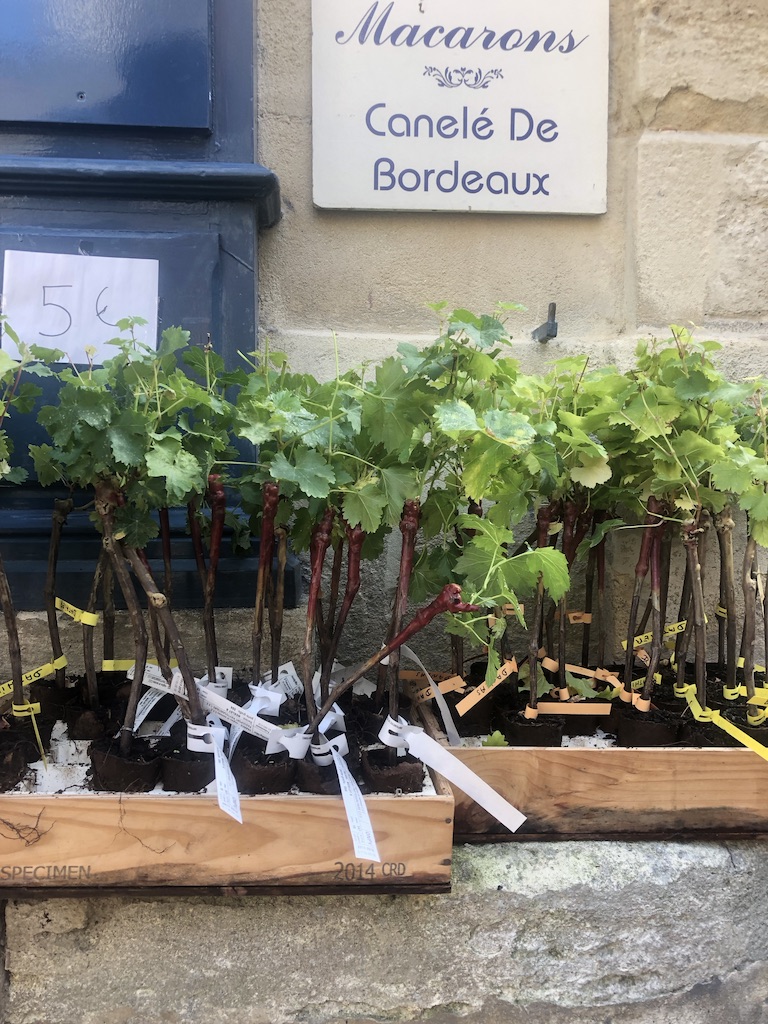
Merlot for sale.
Entre-Deux-Mers
I don’t think this area is really on the same level as the Left Bank and Right Bank. It is literally between two waters – the two rivers – and is quite large. Only white grapes are grown here. It’s not as famous as the other regions, and the wine is inexpensive (think $5), but every time we’ve had Entre-Deux-Mers I’ve thought it was wonderful, so wanted to give it a shout out.
Fun to visit a region that has been making wine for so long, and try to learn as much as I can in three weeks. I have a lot of learning (drinking) left to do before leaving!

 Unemployed and Traveling