This was originally going to be a hate piece on the Canelé, but I’ve had one good version and I see the potential. Canelé is the official patisserie of Bordeaux and shops selling them are on practically every corner. Other than Canelés, there’s not a lot of patisserie here and things were looking bleak (because I love pastry) until last week, when I stumbled upon a treasure – the Gâteau Basque.
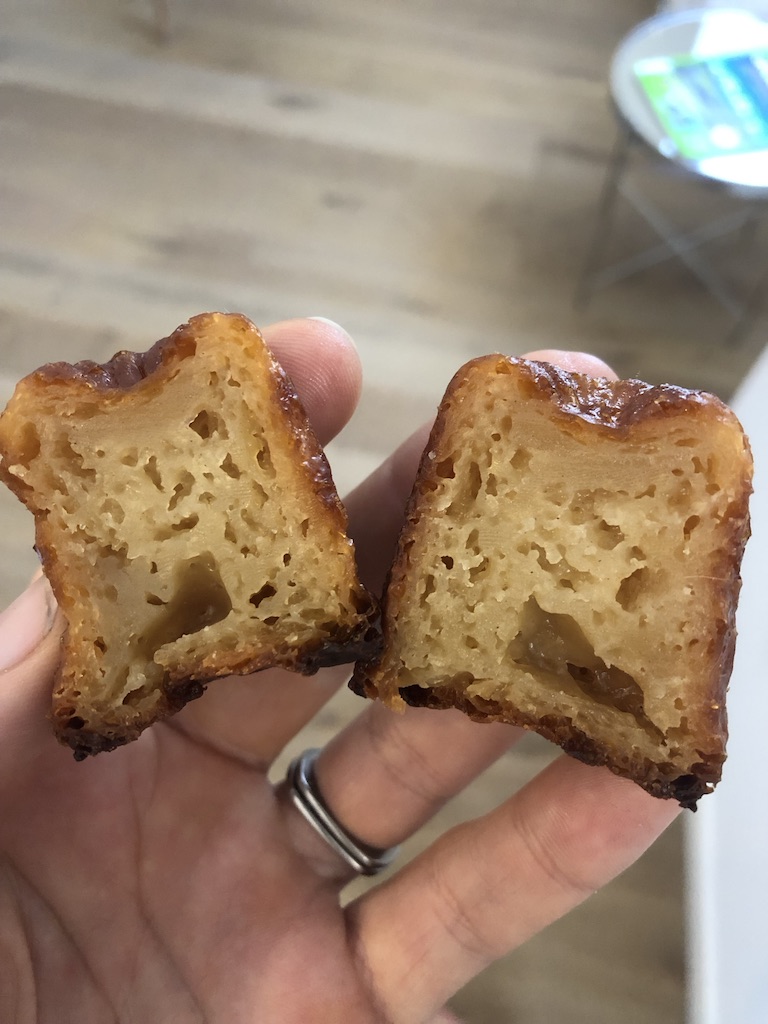
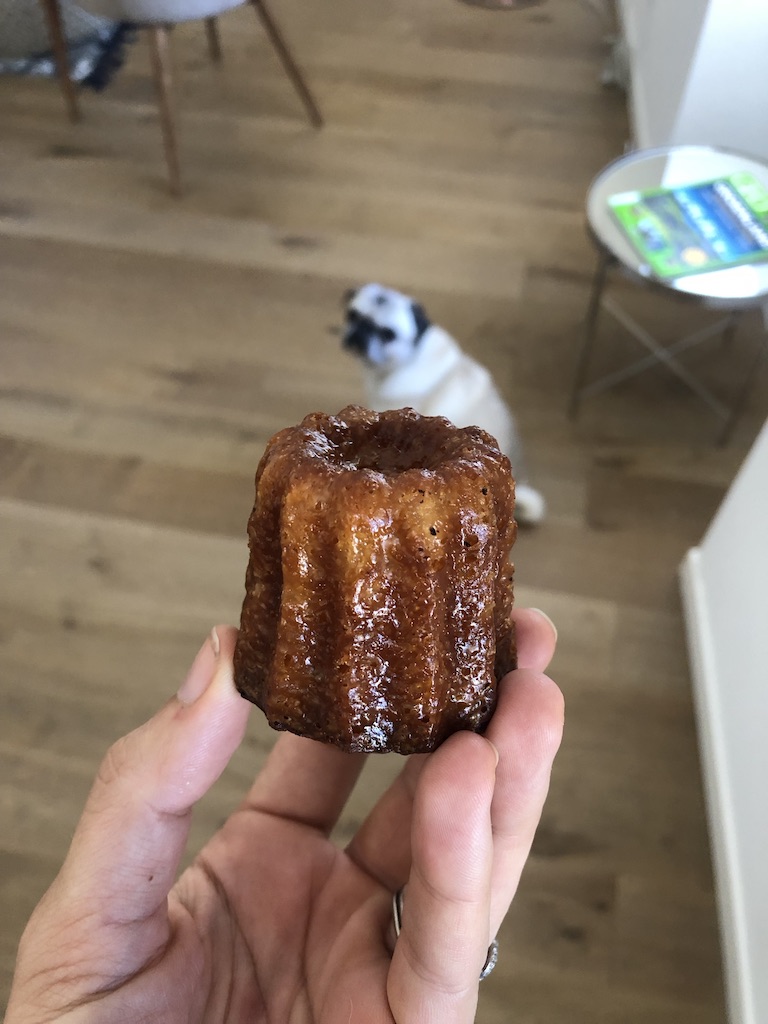
First, let’s get the canelé out of the way. It sounds amazing – a vanilla and rum flavored cake, baked in a fluted copper tin with a caramelized outside, and a soft custardy center. Yes, they are pretty and rum flavored. But “caramelized” is more often “burnt.” And “custard center” is really more like “gummy bear-textured center.” They are – in the words of Richard Sherman – mediocre, at best.
Store bought, gummy inside.
I have had a single Canelé that lives up to the caramelized outside, custardy center description. It was homemade.
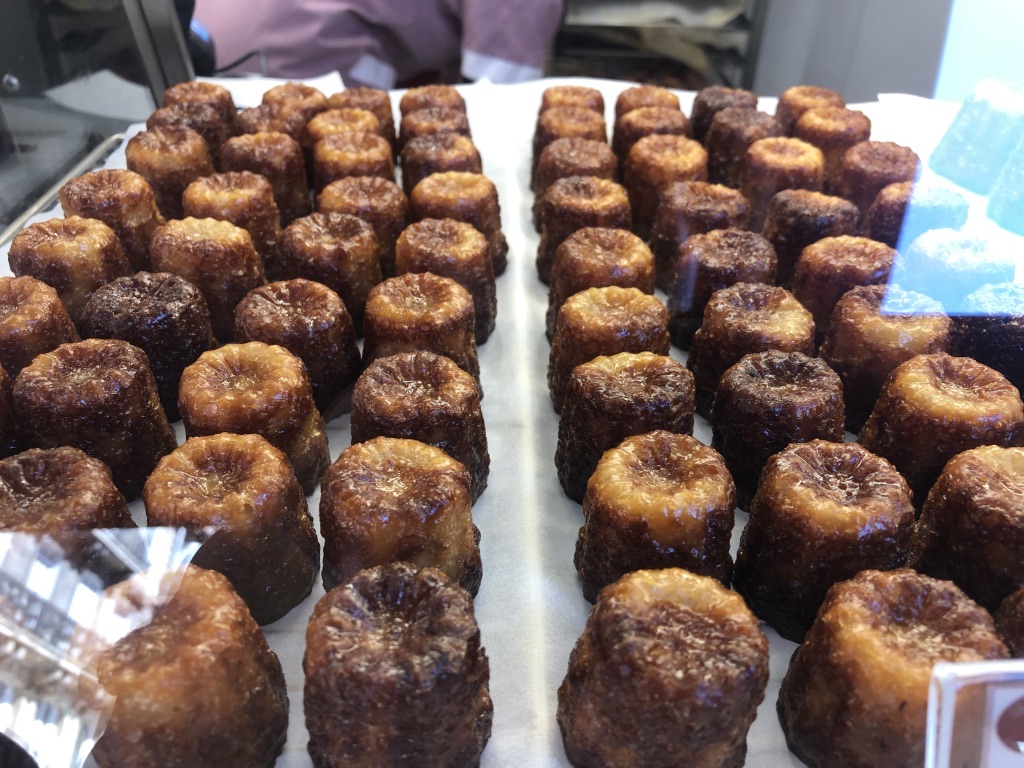
But people love these things. Even the bad versions apparently. On the main pedestrian shopping street, Rue Sainte-Catherine, there are Canelés on every block. I’ve been told I’ve had the best ones in Bordeaux, from Le Touque Cuivrée, and they are definitely tastier than average, but still gummy. I’d get one from the markets if possible.
Alice isn’t impressed.
The homemade Canelé. No gummy center.
No one really knows how they were invented, but the popular story relates to wine. Fining is a wine-making technique that removes sediments and tannins from red wines, and egg whites are fining agents. (Interestingly, we used egg whites during our broth lesson in cooking school to pull all the particles out of consommé, leaving it crystal clear.) Because they used egg whites to fine the wine, there were lots of leftover yolks, and voilà, the Canelé was born.
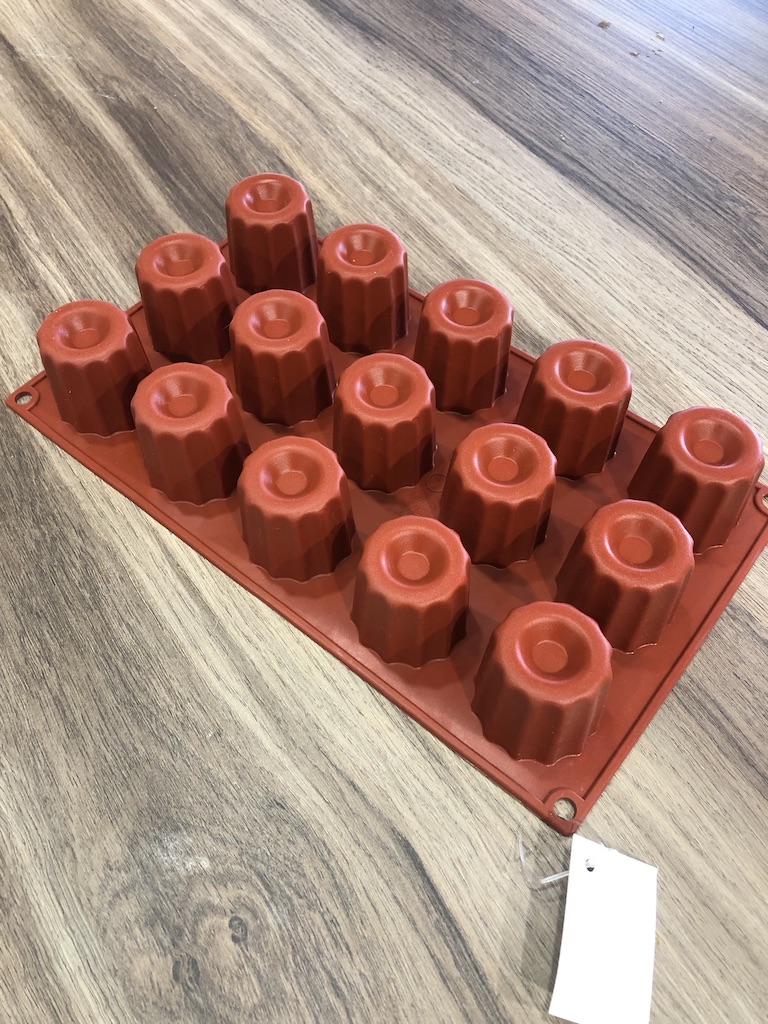
Not one to give up on a pastry, I bought a Canelé mold and will see what I can do at home. Traditional molds are made of copper, but here’s a pro tip from the home chef who made the only one I thought was good – use a silicone mold. Easier to clean.
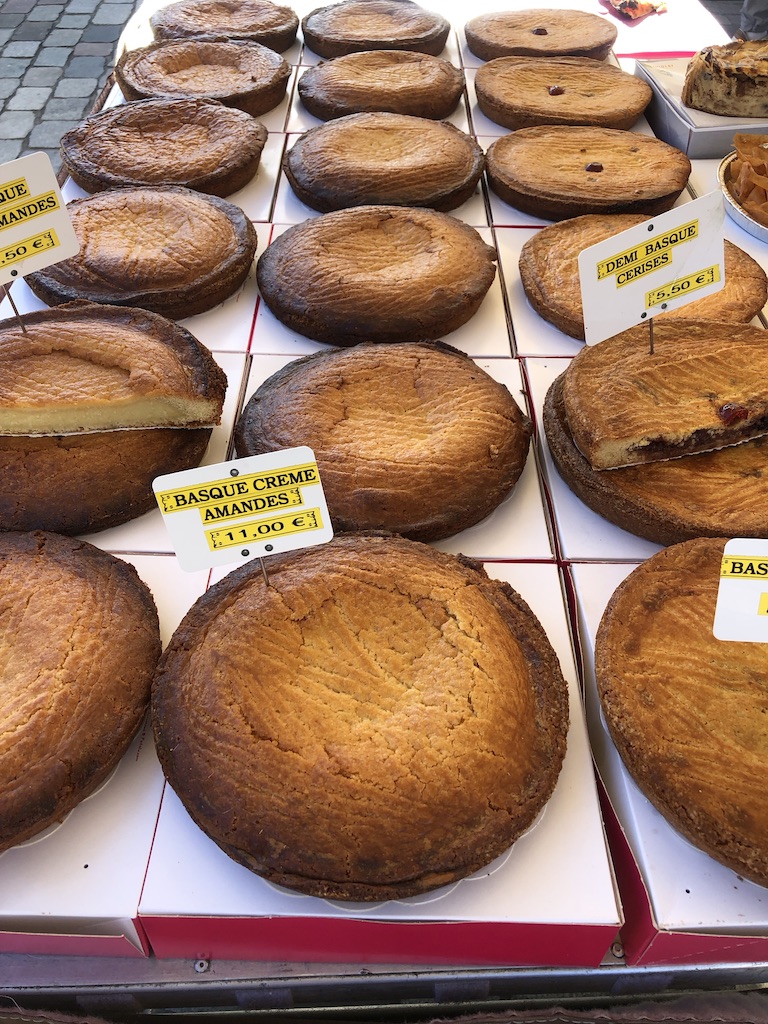
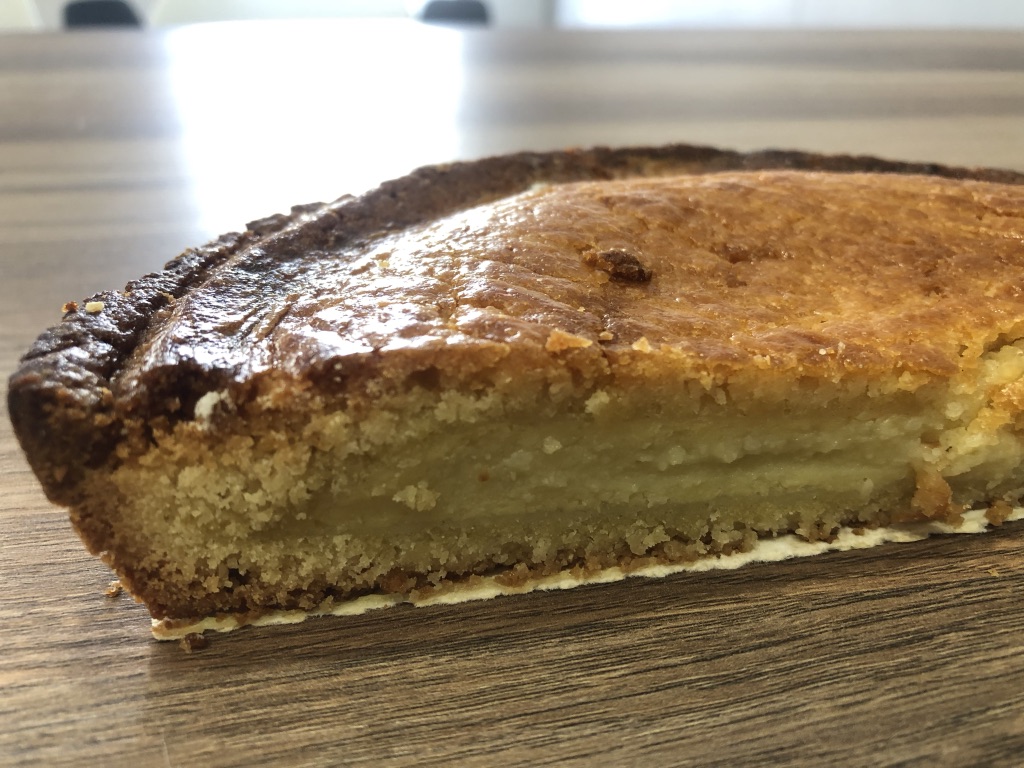
Now, the Gâteau Basque. They are wonderful. The cake is actually from Basque (French/Spanish Boarder), not Bordeaux, but they are everywhere here, so I’m assuming they’ve been adopted by the Bordelais. It’s a buttery cake traditionally filled with either black cherry jam or vanilla pastry cream. I think they put almond flour in them, so the cake has a really nice texture.
I came across an NPR interview with Dorie Greenspan talking about the Gâteau Basque, and Michelle Norris described it as a fancy Pop-Tart. She is exactly right about the cherry version. The creme version is not as sweet. I can’t pick a favorite. Best recommendation is to get them both and alternate bites.
In London I took WSET Level 1 and 2 Wine Courses and passed withdistinction, so now this is a wine blog. We’ve been drinking a lot of nice wine here, going on some tours, and slowly figuring out what we are drinking.
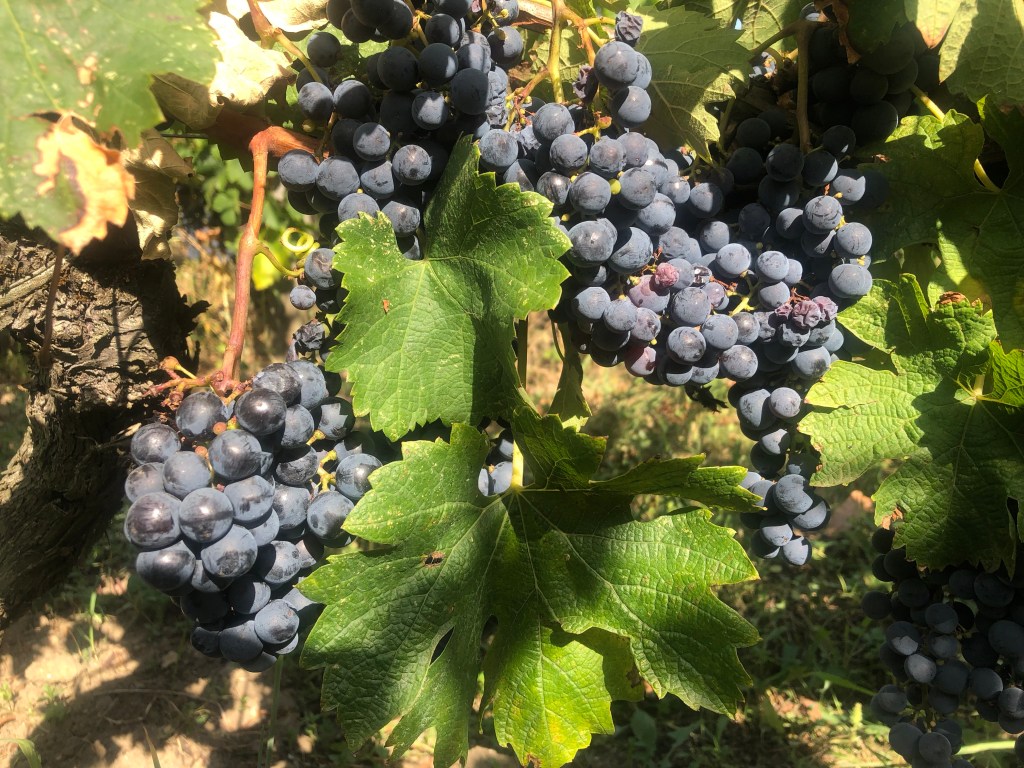
Over the last few weeks we’ve visited wineries on our own, and took a bike tour to visit a couple others. We got lucky on timing and saw the bottling of last year’s vintage at Chateau Bernateau, and picking and sorting at Chateau Franc Mayne. Usually all that is happening at wineries is aging in barrels, so it’s fun to see production in action. We also ate lots of Merlot grapes off the vine, which were delicious! 2019 is going to be a great vintage, I can tell.
Merlot grapes, about a week before harvest.
Here are some Bordeaux basics . . .
Bordeaux is by far the largest wine region in France. They grow black and white grapes, but are more famous in the U.S. for red wine. Bordeaux has a “temperate ocean climate”. I’m not totally sure what that means, but we’ve been here most of September, and it has been in the high 80s most of the time. It has also rained a lot. There is a lot of limestone, and sandy/gravely soil, which the winemakers like.
The black grape varieties, in order of most widely grown to least, are Merlot (by far the most prominent), Cabernet Sauvignon, Cabernet Franc, Petit Verdot, Malbec, and Carménère. On the white varietal side, Sauvignon Blanc and Semillon are planted about equally, and together make up over 90% of the white varietals planted.
With all these varietals they make dry red wines, rose, dry white wines, sparkling wines, and sweet white wines (Sauternes). Wines are nearly always blends. It’s rare to have a wine that is made of a single grape. (But we happen to have one in our nice AirBnb wine fridge that we are excited about. It’s 100% Cabernet Franc from a Saint-Émilion Grand Cru.) They really like to age red wine here, and a wine from a few years ago may not be very fun to drink. It needs to age for like 10+ years to mellow out the tannins. The whites can mostly be consumed right away.
The wine region is based around an estuary where the Garonne and Dordogne rivers meet. There are basically three large wine growing areas – Left Bank, Right Bank, and Entre-Deux-Mers. These are all broken up into many appellations. Here’s a good map.
The Left Bank
The Left Bank wines are dominated by Cabernet Sauvignon. If you like California Cabs, this is as close as you are going to get. The wines are medium to full-bodied, and are described as having high acid and high tannin levels. But, I think if you are used to drinking wine from California, you will think they are much smoother – meaning less tannins and acid – than you are used to, and with less pronounced flavors.
There is a truly bizarre quality classification for wines from the Left Bank. In 1855, there was a classification, where the wines were ranked based on the Chateau’s reputation from first to fifth growth (“crus”). In other words, the wine wasn’t classified by the terroir or appellation, but the classification is directly connected to a chateau. The classification has never materially changed, even as chateaux have changed ownership or expanded their vineyards. So if a chateau was classified as Premier Crus (first growth), back in 1855, it still has that classification today, and it does not matter if the wine is now terrible. There are only five Premier Crus, btw.
Anyway, its pretty confusing. If you buy wines from these AOCs (Appellation d’Origine Contrôlée) you should be in good shape – Haut-Médoc, Paulliac, and Margaux. These are premium appellations.
If a bottle is labeled Bordeaux AC or Bordeaux Supérieur AC, it is most likely produced outside of a prestigious appellation (or it would have the appellation name on the bottle), or not according to the strict rules of the prestigious appellations. They are good, lower-priced wines.
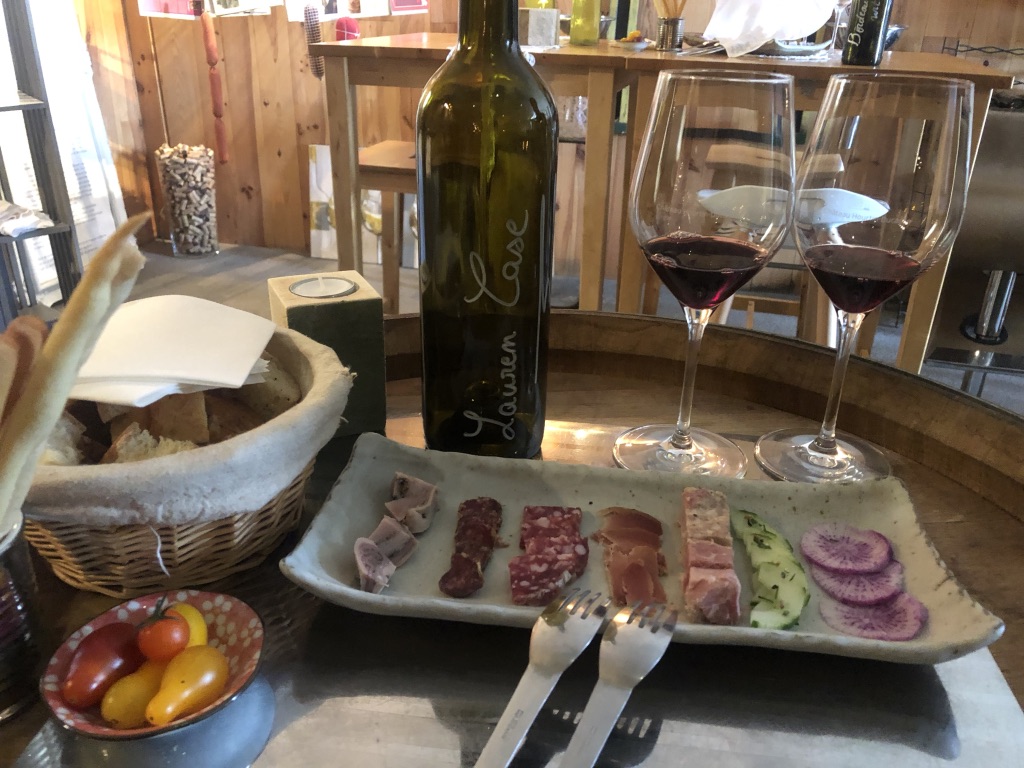
Tasting at Chateau Hourtin-Ducasse. Got pretty excited they wrote my name on the bottle.
Right Bank
Right Bank wines are Merlot dominant. They tend to be “softer” in style than Left Bank wines. They have medium acids, tannins, and have red fruit characteristics (rather than black fruit like over on the Left Bank). There is really thick limestone underneath the soil here, which apparently leads to good wine.
The best wines come from St. Emilion, a charming and very old town about 45 minutes outside Bordeaux. And the best appellations within St. Emilion are Saint-Emilion Grand Cru AC and Pomeral AC.
We visited St. Emilion twice, once on a bike tour, and a second time to check out a few more vineyards. We really enjoyed it. It is a UNESCO world heritage site. It was named after a monk who, in the 700s, lived here for 17 years as a hermit in a limestone cave.
The limestone is a pretty soft yellow color and is a good building material, so there are quarries all over the area and the whole region has buildings made from the stone. Many chateaux have underground limestone cellars. During the french revolution, the aristocrats would hide in the quarries and cellars. In one cellar we visited, there is a drawing from the revolutionary period of a woman’s severed head! Lots of interesting history in these parts.
St. Emilion has its own classification system, that is different from the 1855 classification. The St. Emilion classification began in 1955, and is revised every 10 years. If you are a lucky landowner/winemaker, you can get a Grand Crus Classe or, even better, Premier Cru Classe classification. Pomerol doesn’t classify its wines but it is a premium appellation, so just go ahead and drink anything from there.
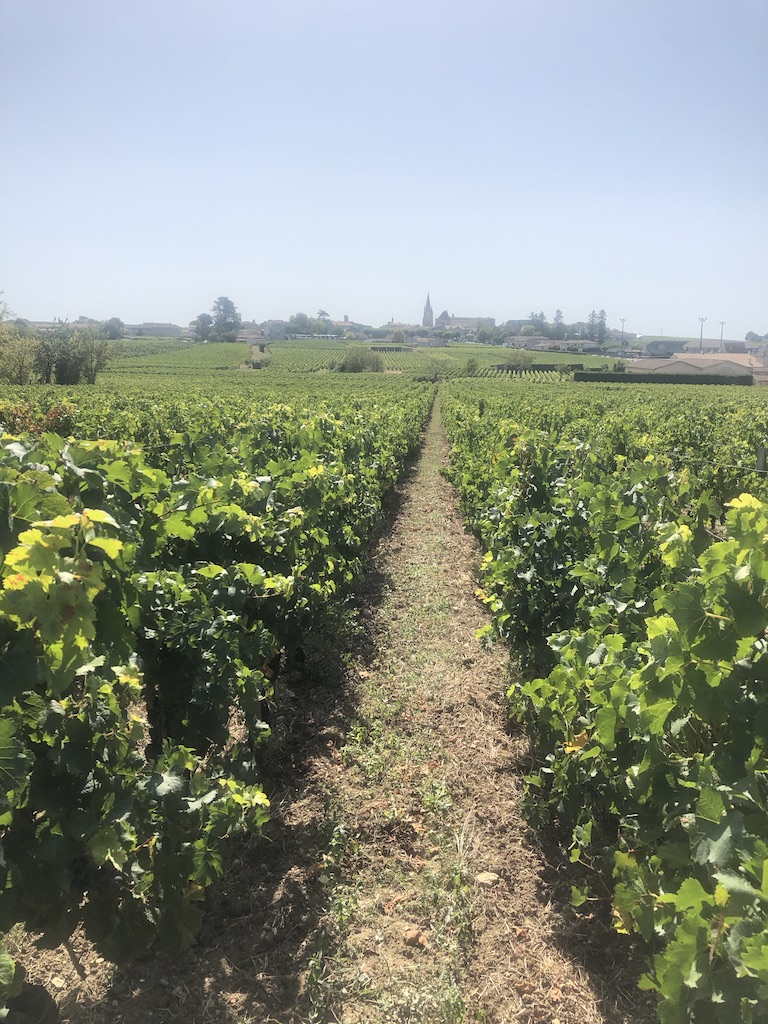
St. Emilion waaaay in the background.
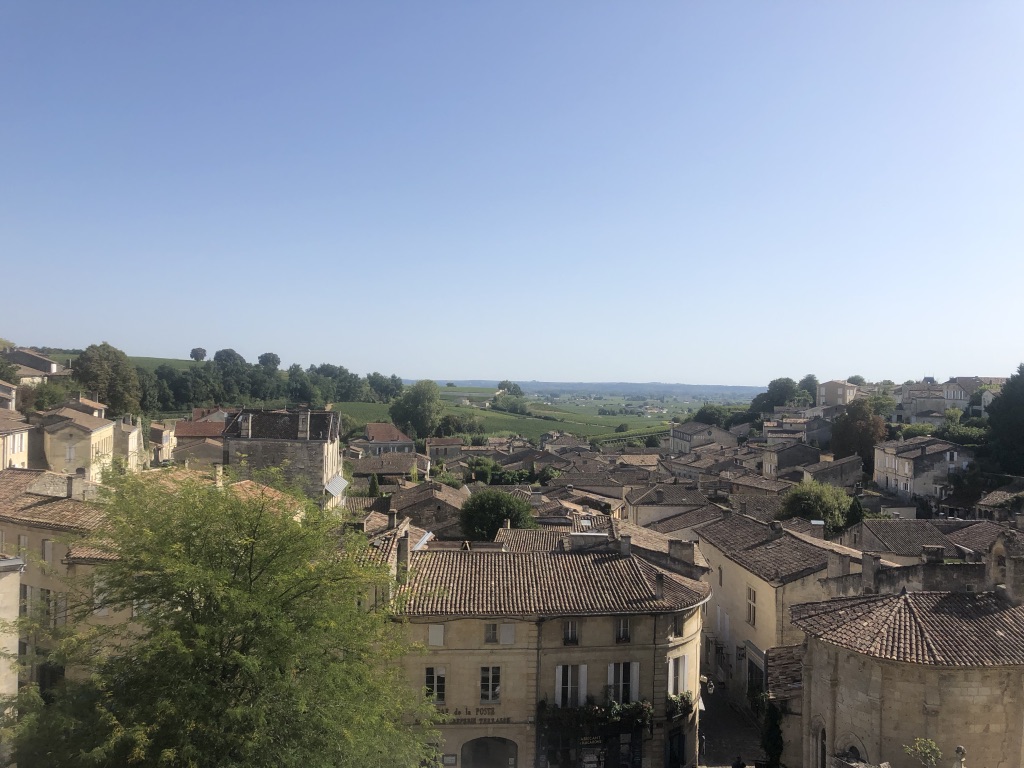
View overlooking St. Emilion.
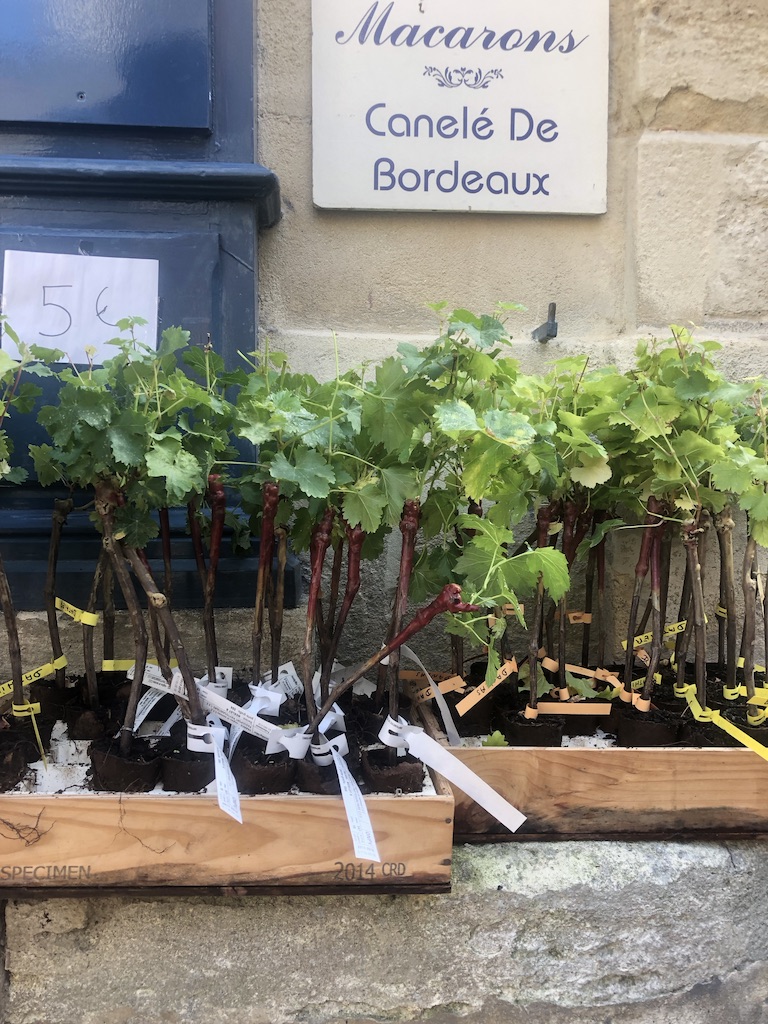
Merlot for sale.
Entre-Deux-Mers
I don’t think this area is really on the same level as the Left Bank and Right Bank. It is literally between two waters – the two rivers – and is quite large. Only white grapes are grown here. It’s not as famous as the other regions, and the wine is inexpensive (think $5), but every time we’ve had Entre-Deux-Mers I’ve thought it was wonderful, so wanted to give it a shout out.
Fun to visit a region that has been making wine for so long, and try to learn as much as I can in three weeks. I have a lot of learning (drinking) left to do before leaving!
Here’s what we are working on before leaving next week.
During our summer in London, we got out the City a few times and visited Henley, Oxford, Bath, Glasgow, and Edinburgh, but we wanted to see more of the countryside before heading back to the Continent. So, when our lease ended in London at the end of August, we packed up a car with the steering wheel on the wrong side, and we were off.
Besides remembering to drive on the left and not drifting off the road, the hardest part was deciding where to go. There is way too much to see in the UK. We finally decided on the Cotswolds, North Wales, the Lake District, and Oban, Scotland. The trip was great, filled with lots of rain, just enough sunshine, lots and lots of sheep, and a few hikes with a pug in a backpack.
Not sure what they were thinking giving us a new Audi. But proud to report only a few tires were harmed.
Cotswolds
Our first stop was a few hours west of London, in the Cotswolds. The Cotswolds is the place where all the cute houses with thatched roofs live. It’s an Area of Outstanding Natural Beauty, and “AONB”. I have not looked up what that means, exactly, but it is pretty. The Cotswolds are full of sheep, meadows, rolling hills, bucolic villages, and extremely narrow/winding roads where people drive at extremely unsafe speeds in classic British sports cars.
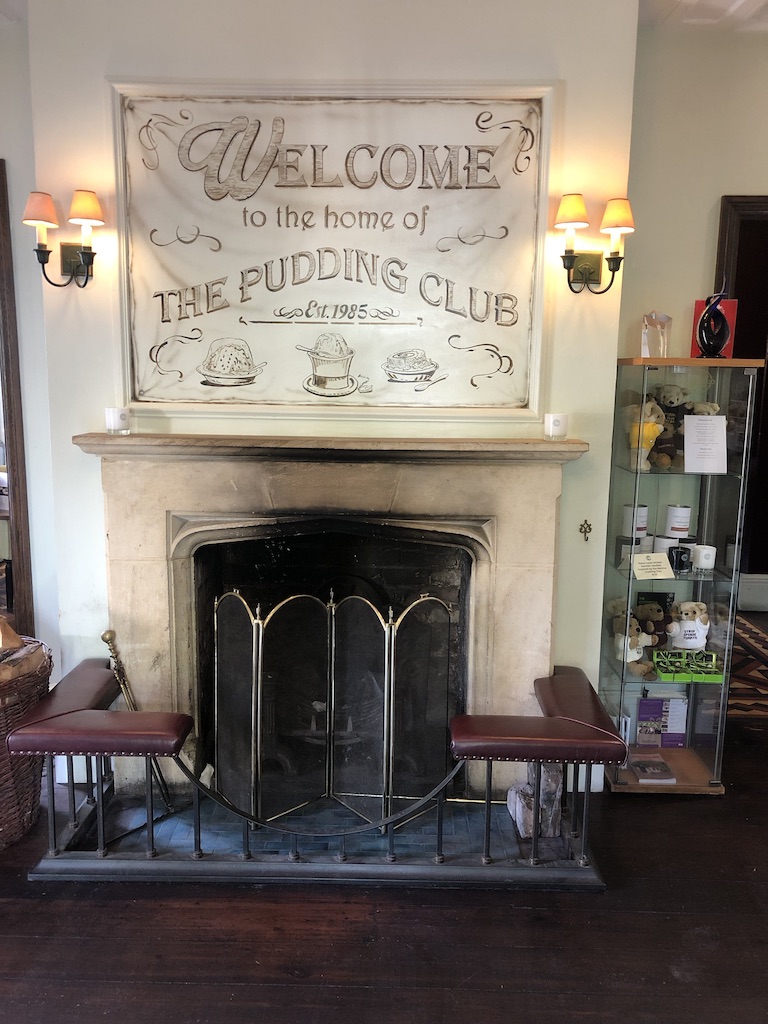
We stayed in a tiny little village called Mickleton, which is less of a village, and more like a few homes around a pub. And our B&B – home to the Pudding Club, whose mission is to “preserve the Great British Pudding.” We had some puddings – sticky toffee, syrup sponge, and a chocolate one – all served with a huge side of warm creme anglaise. The British pudding is extremely sweet, and they all sort of taste the same. I still wouldn’t turn one down.
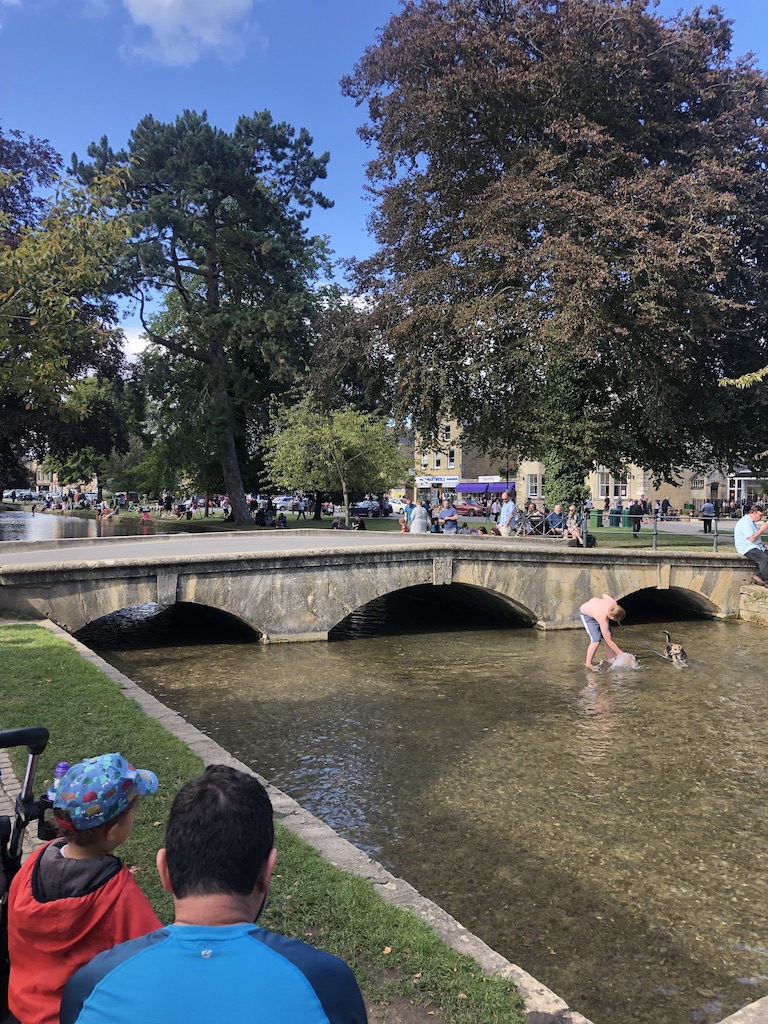
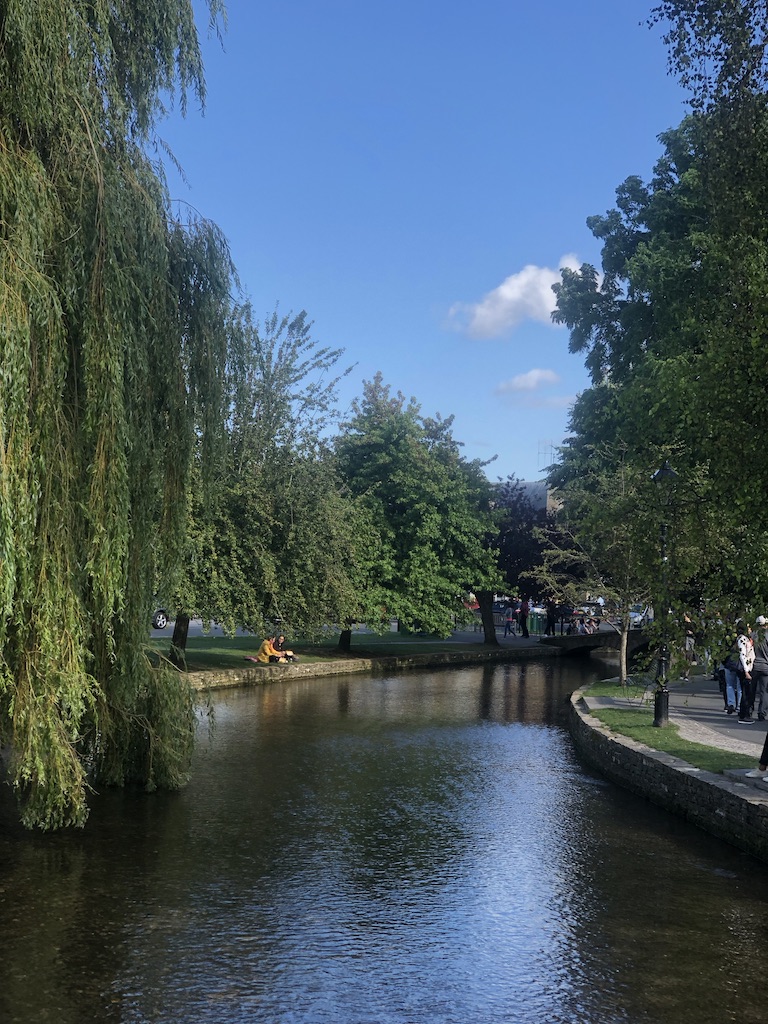
We had a full day to drive around the area, and stopped in the villages of Chipping Campden, Stow-on-the-Wold, and Bourton-on-Water. Bourton-on-Water has a shallow, wide stream running through it. There were kids and dogs splashing around. It was pretty fun. Stow-on-the-Wold was the biggest village, and was charming. I ate a delicious bakewell slice there.
Chipping Campden.
Bourton on Water
Bourton on Water
View from B&B
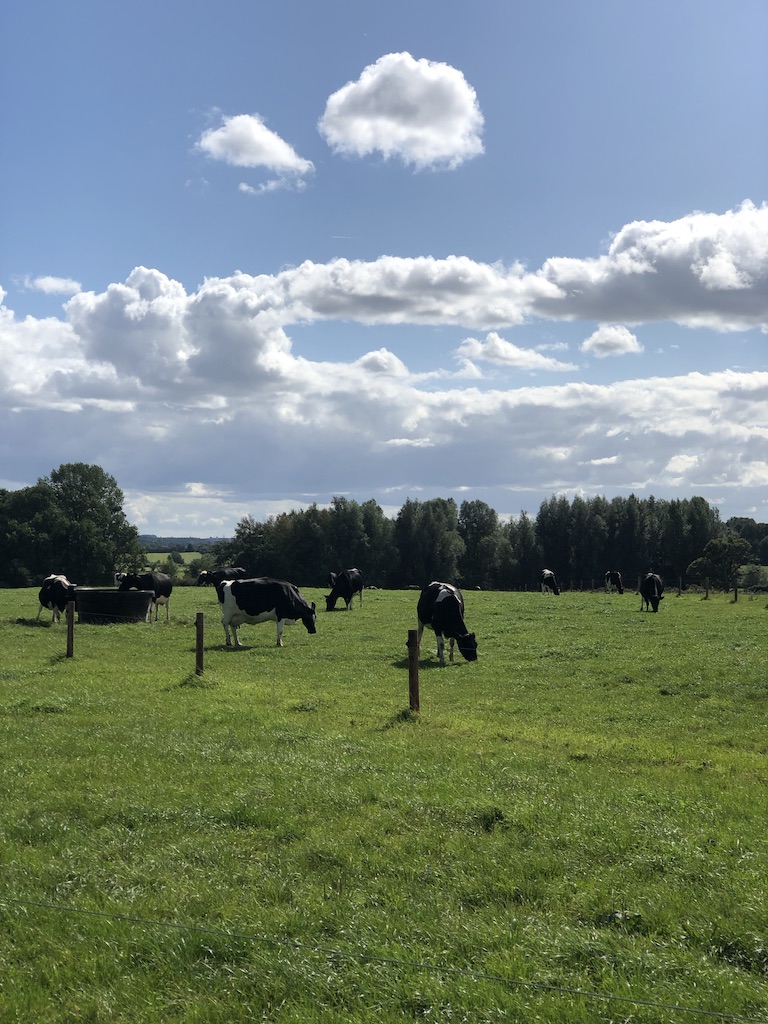
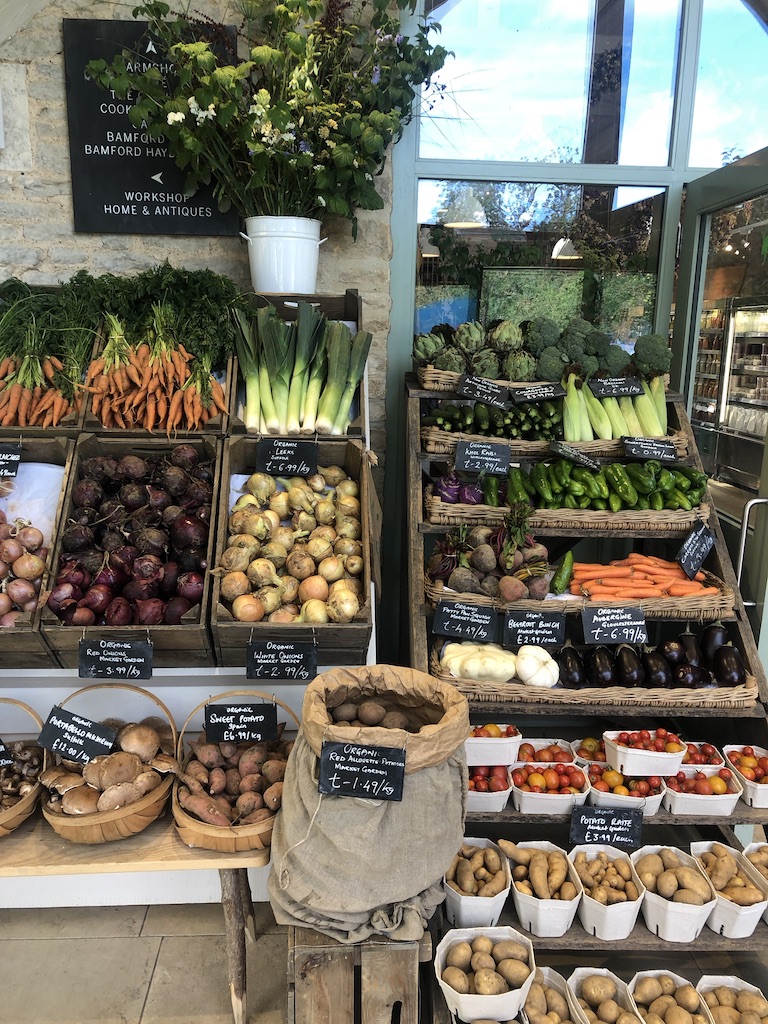
We had lunch at Daylesford, and did a little “hiking” around their farm. (Marked “D” on my nice map above.) Daylesford is an organic farm in the Cotswolds, which also has a few farm shops in London. There was a Daylesford close to our flat in Notting Hill, where we went about once a day because it is so great.
Happy Daylesford cows.
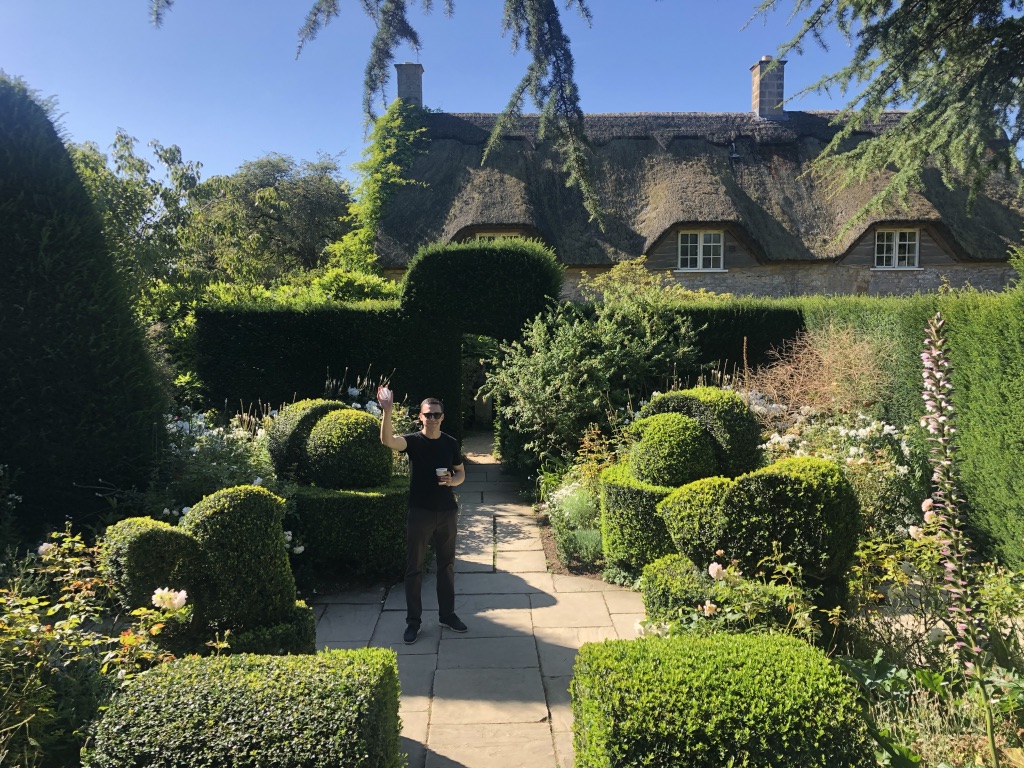
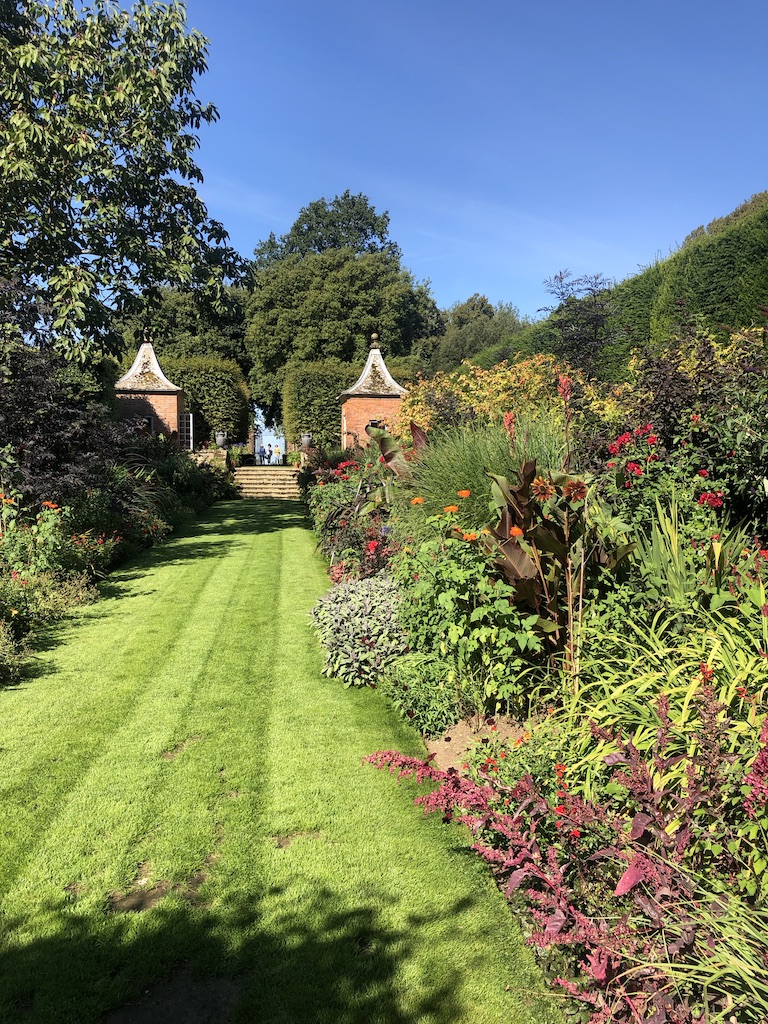
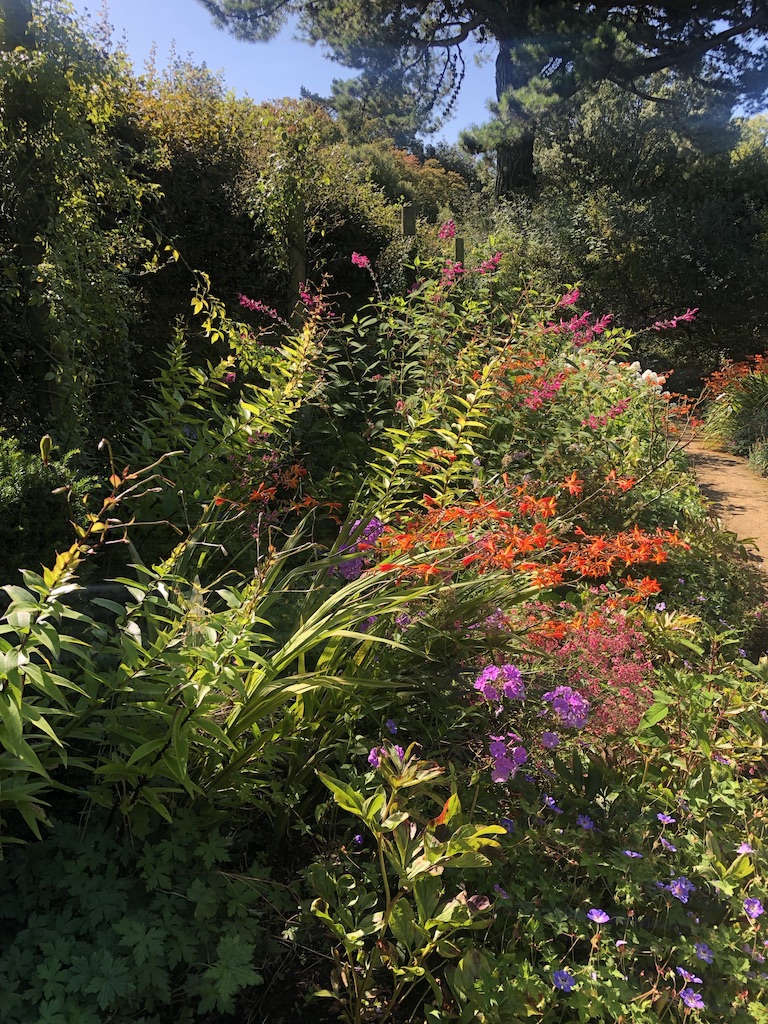
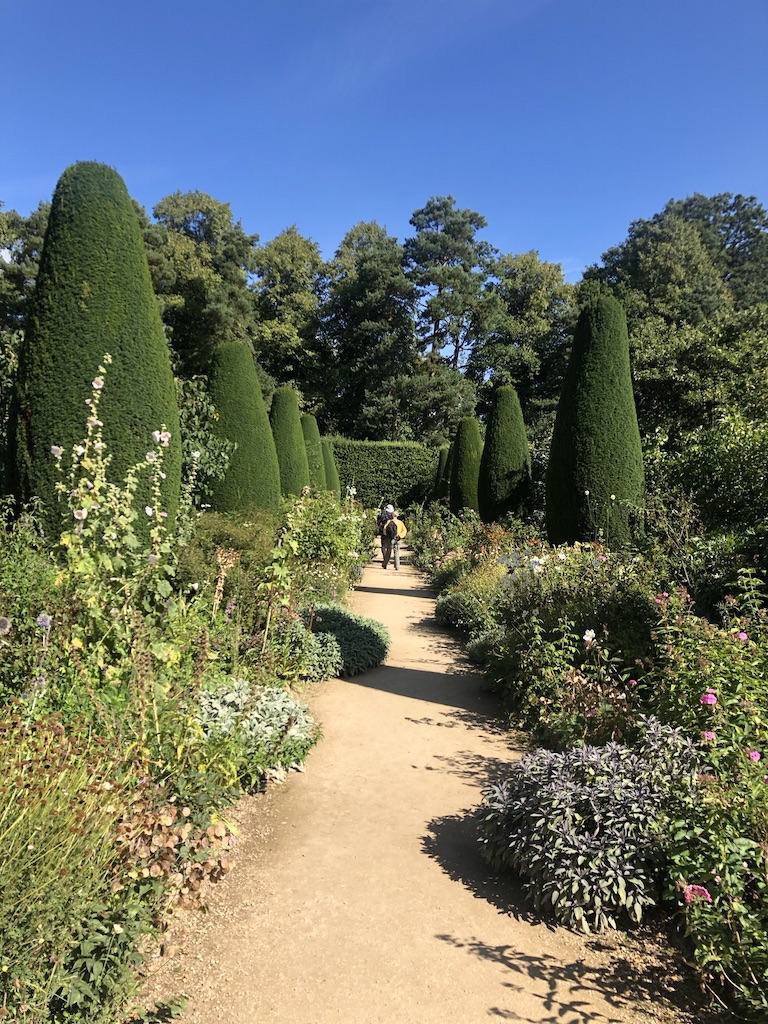
We stopped at Hidcote Manor Gardens, which were incredible, and worth a visit if you like gardens. Hidcote claims to be the first garden where the concept of outdoor rooms was used, and it does the outdoor room well. A few Hidcote photos below.
Driving was stiff terrifying on this portion of the trip.
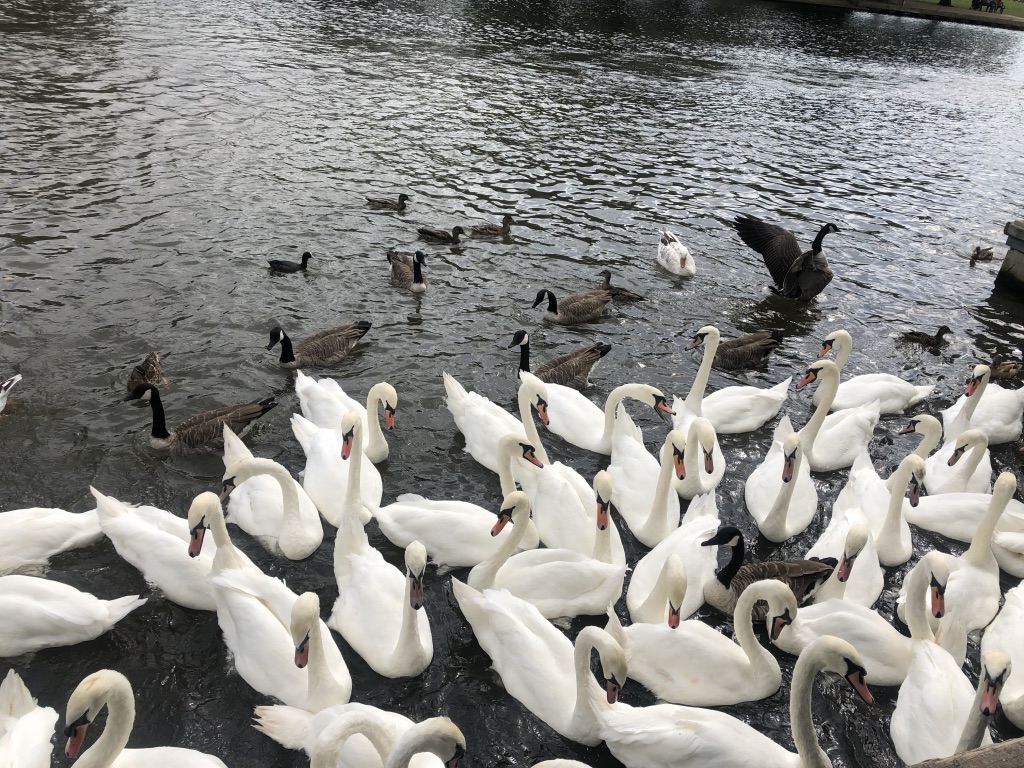
On our way out of the Cotswolds, we stopped for lunch at Stratford-upon-Avon, where we walked by Shakespeare’s birthplace, and got barked at by some swans. If you want to see swans you don’t need to look very hard, they are everywhere in Britain, but there are a lot in Stratford. Stratford is super touristy, though worth a quick stop to see all the old Tudor buildings.
Shakespeare born here.
Nasty gang of swans.
North Wales – Conwy
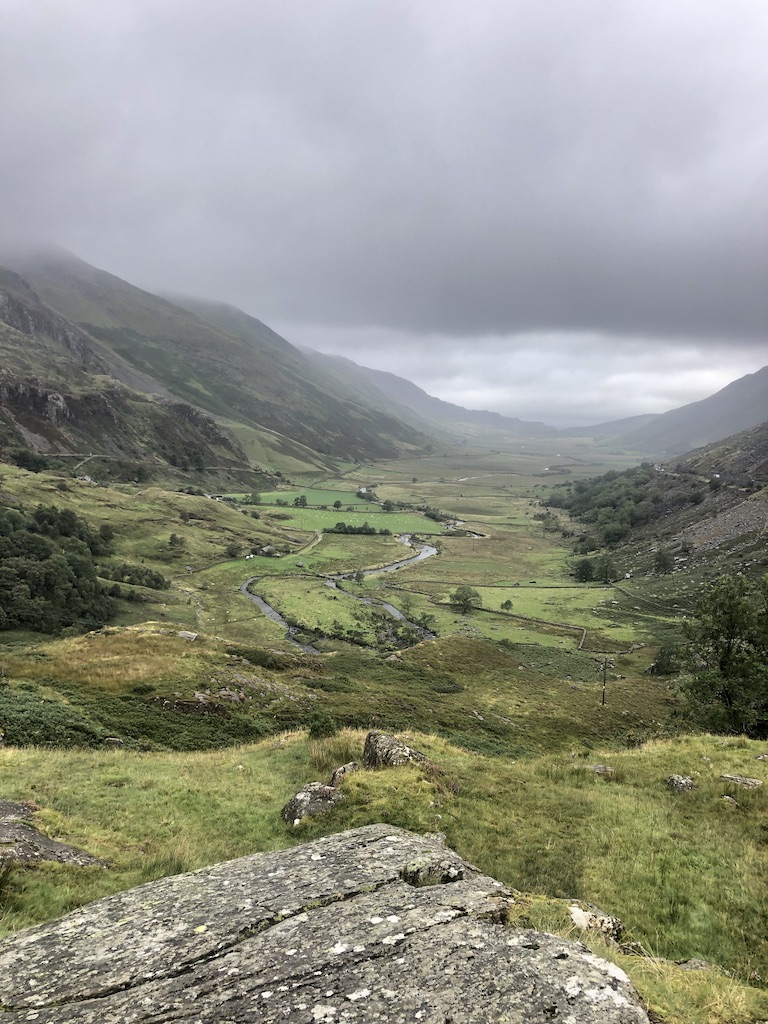
We drove a few hours north and landed in Northern Wales. Wales is really beautiful. There is tons of hiking. The mountains are covered in ferns and heather. There are huge castles everywhere.
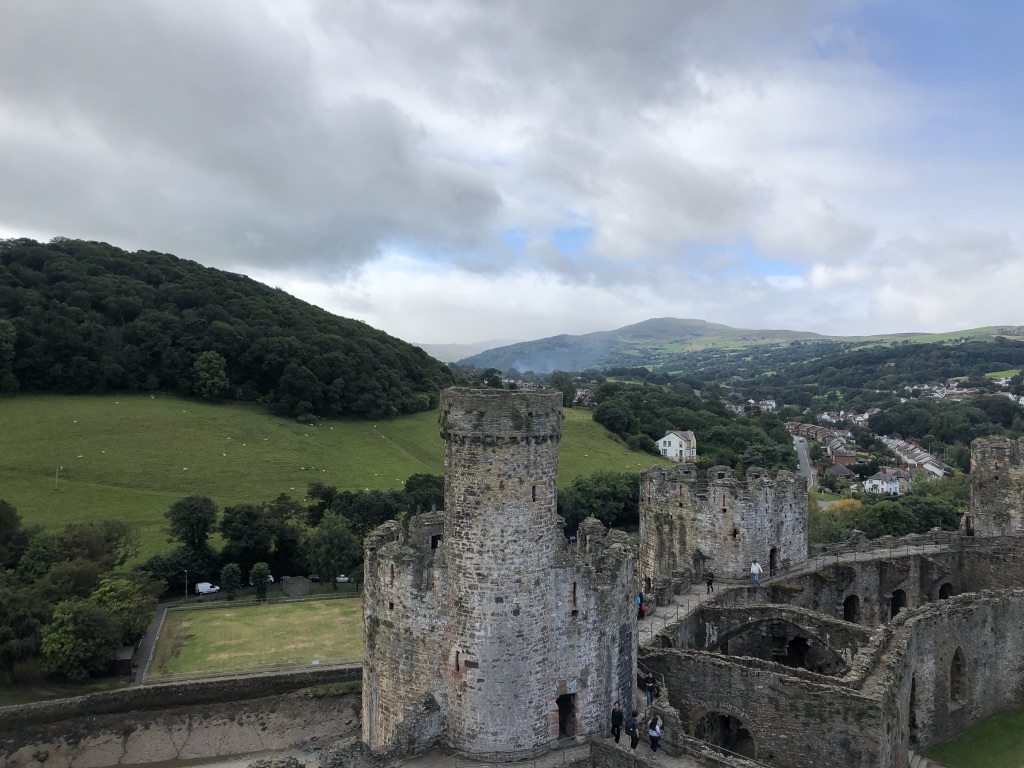
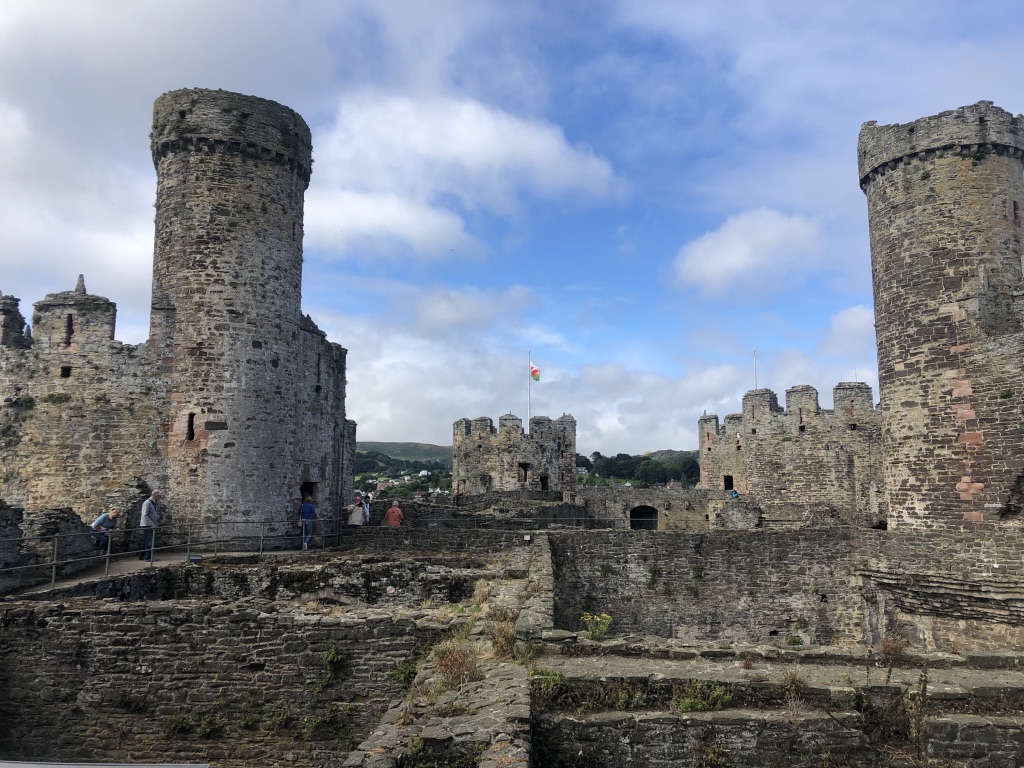
Conwy, where we stayed, sits at the mouth of the River Conwy. It is a small town of about 4,000. A huge castle, Conwy Castle, built around 1280 by Edward I, towers over the town. The castle is pretty rundown (as you might expect an almost 800 year-old castle to be), but the walls of the great hall and royal chambers are all still standing, and there are impressive views from the top of the towers. For example:
View from a few stories up the castle, looking over what was the roof.
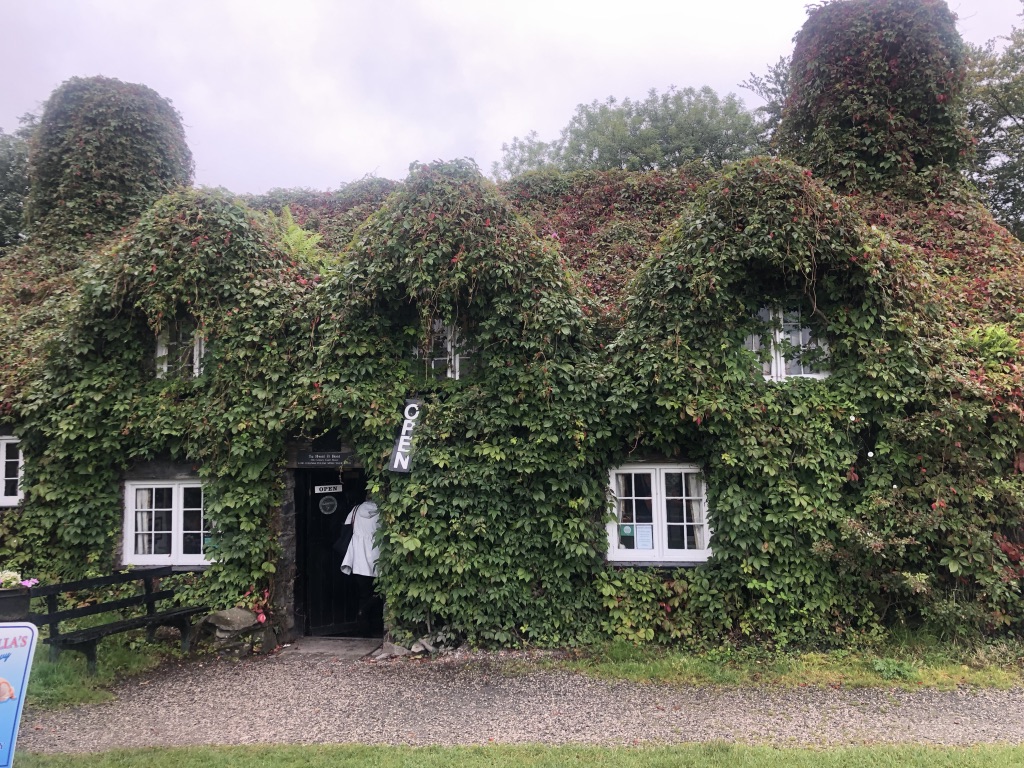
We had a full day in Wales to explore, which was nowhere close to enough time. Especially because you have to spend some time trying to understand Welsh. Plus we had bad weather. I’d love to see Wales on a sunny day. We stopped at a pretty ivy-covered cottage in Llanrwst below, called the “Tu Hwnt I’r Bont”, drank tea and ate scones. See what I mean by taking a minute to figure out the Welsh?
Yum.
By this point, driving the car was no problem, except for the occasional single-track stone bridge built in the 1200s that you are really not sure holds the weight of a car. We crossed one such bridge to get to tea.
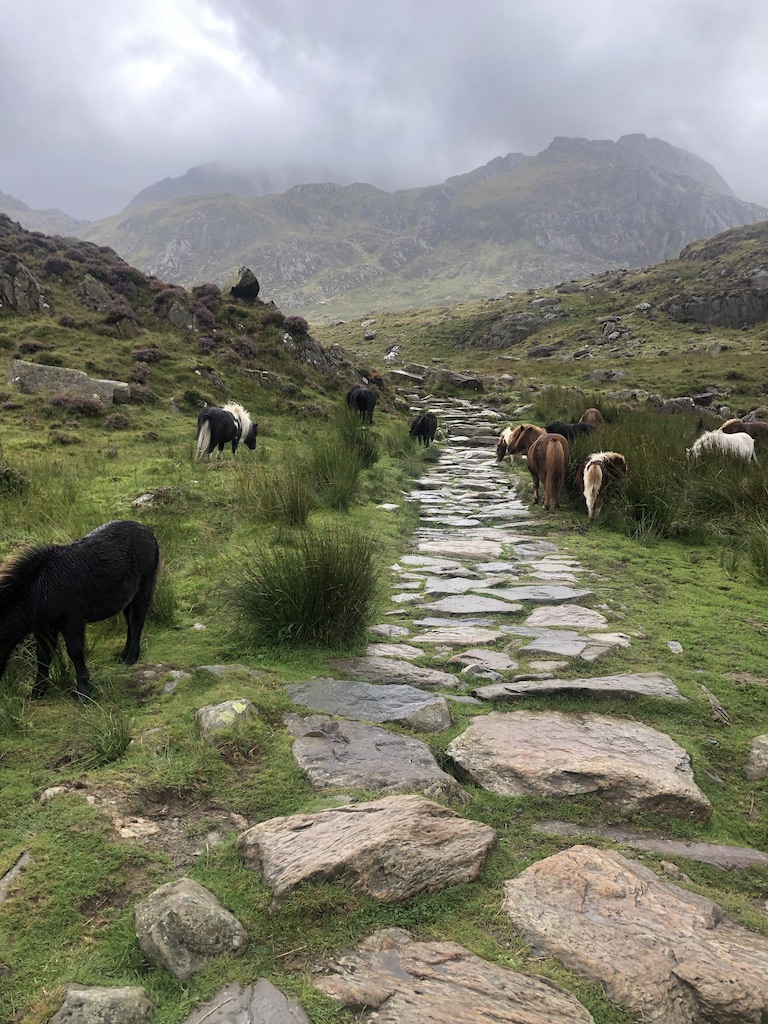
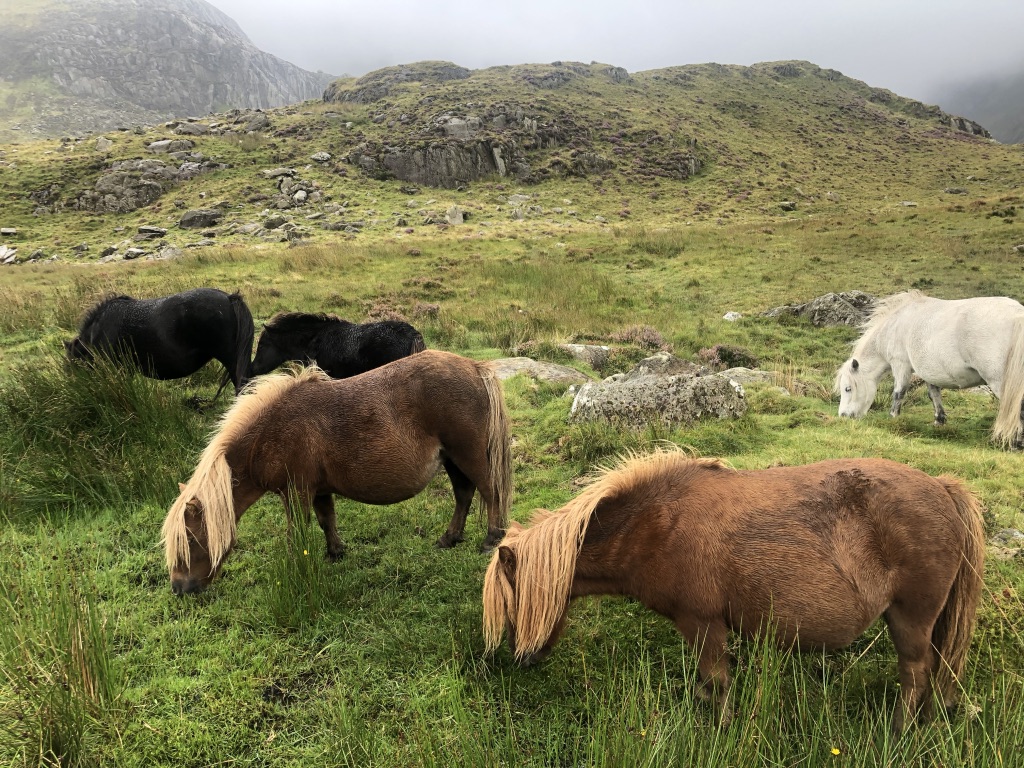
After tea, we went on a hike up to Llyn Idwal (a mountain lake) in Snowdonia National Park, which was possibly the best part of the trip because there were ponies on the trail! They were all very pleasant ponies on the way up, letting us pet them and introduce them to Alice. On our way down, however, they were in a mood. One bit my leg – unprovoked! – with its tiny pony teeth.
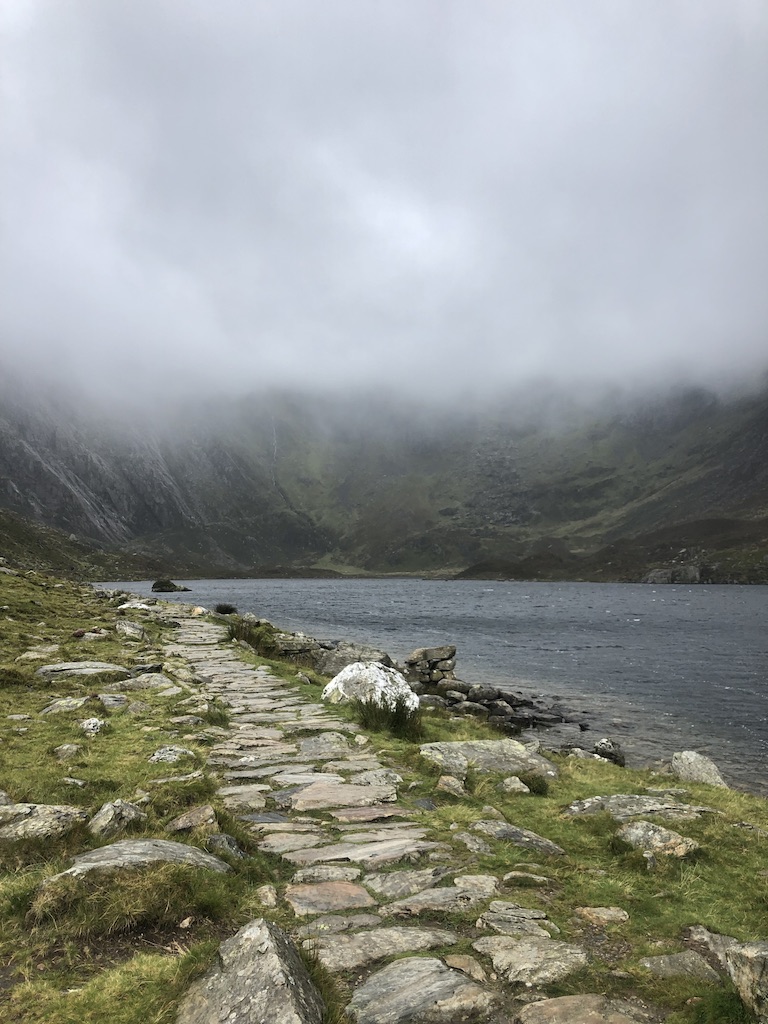
The lake itself was almost as exciting as the ponies. Very pretty. The trail is exposed and it was windy and rainy, so by the time we got to the top we were soaked. Everyone else on the trail was dressed appropriately in rain gear. We were not. People were swimming in the lake, while the wind was blowing whitecaps on the water . . . . These people do not mind wind, rain, and cold. We decided not to swim this time, and instead hid behind a boulder from the elements before hurrying back down to the ponies.
Llyn Idwal
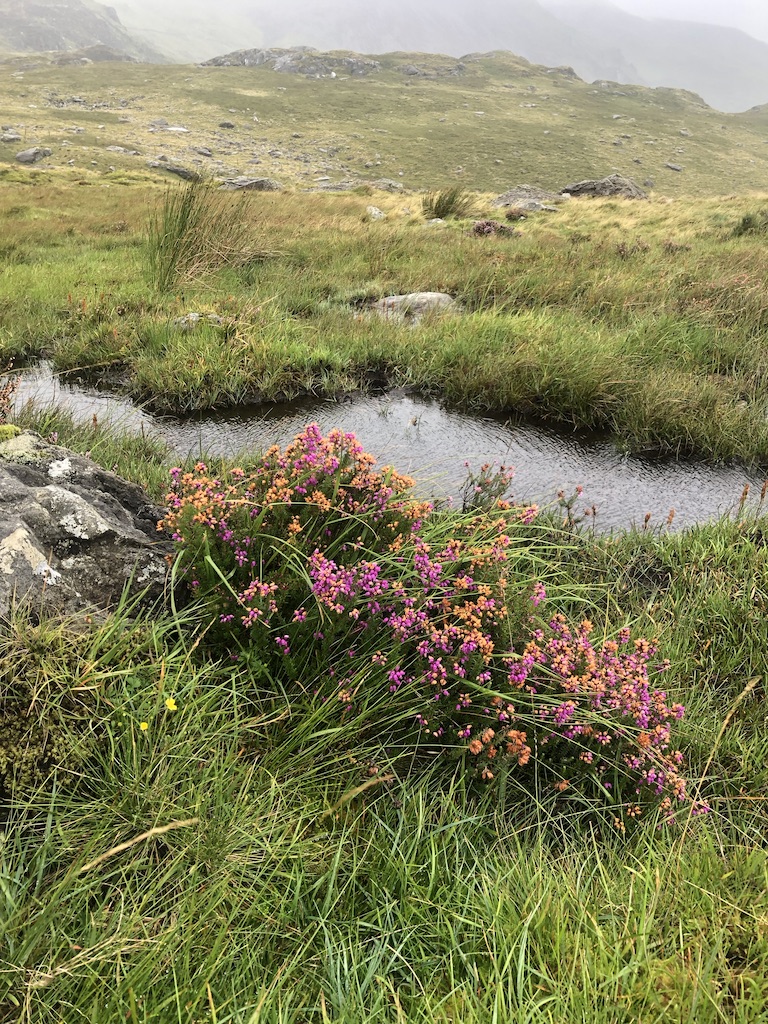
Heather changing color.
We got a little wet.
Nighttime at the harbor in Conwy looking back toward’s the castle.
The Lake District – Keswick
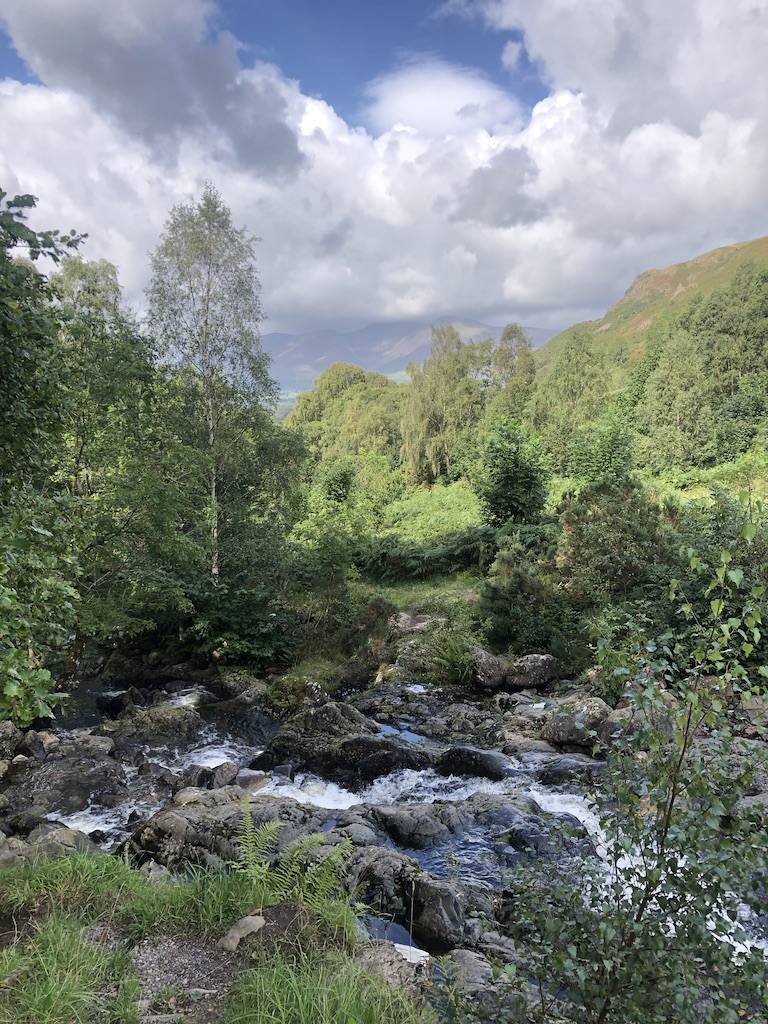
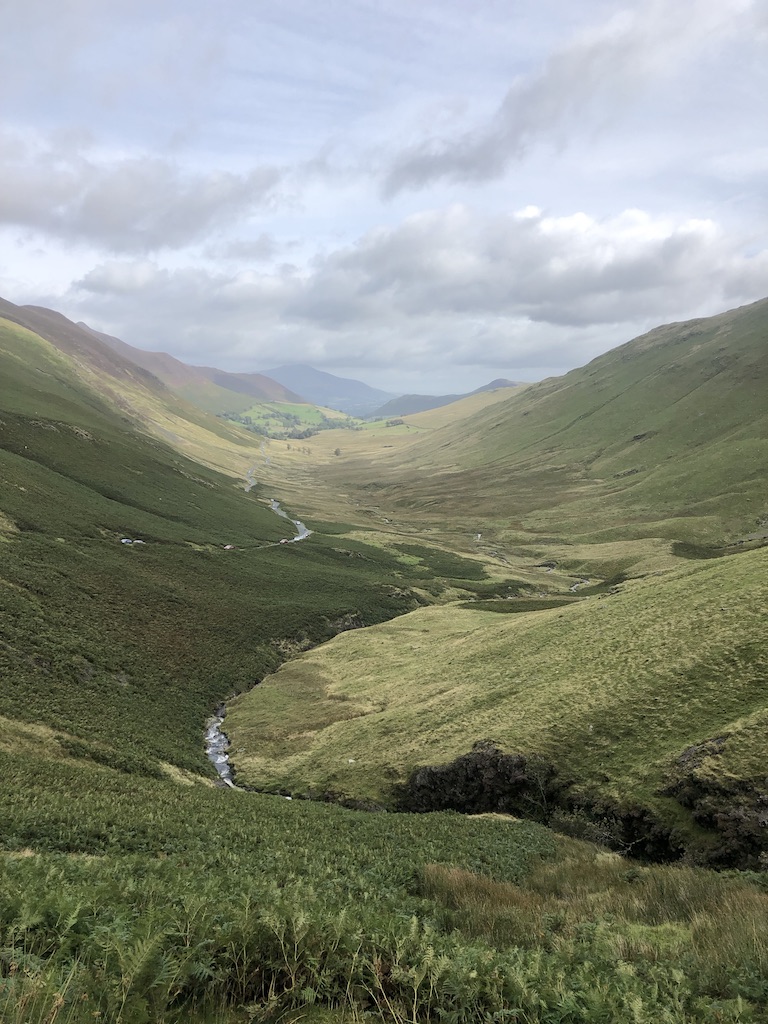
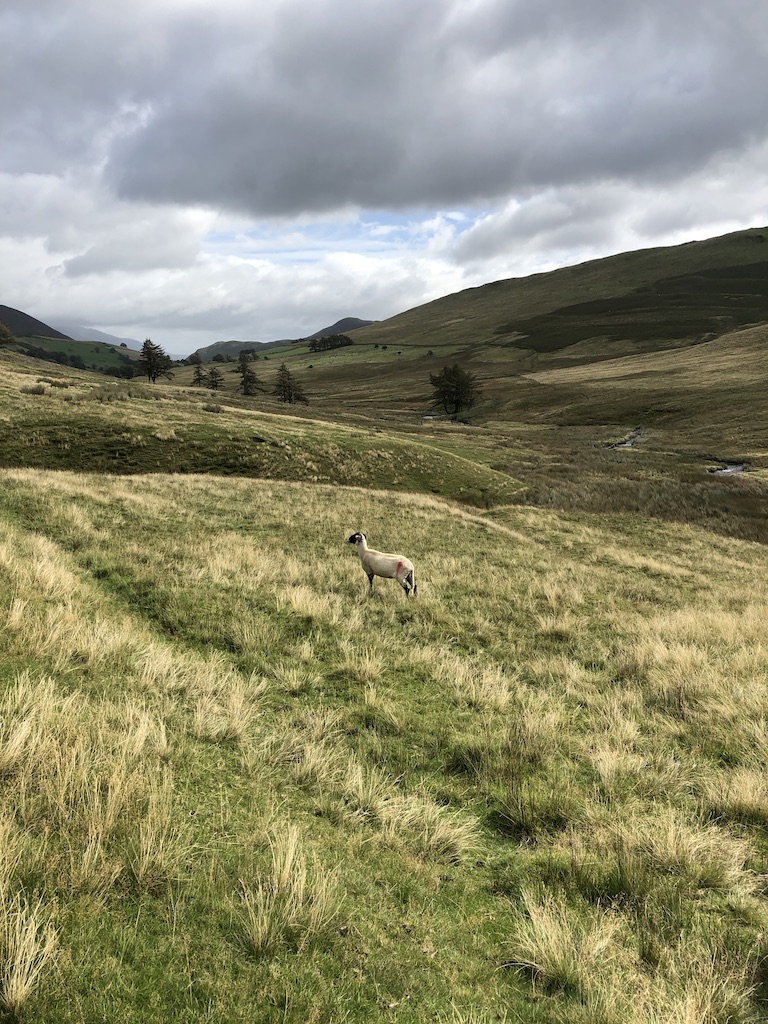
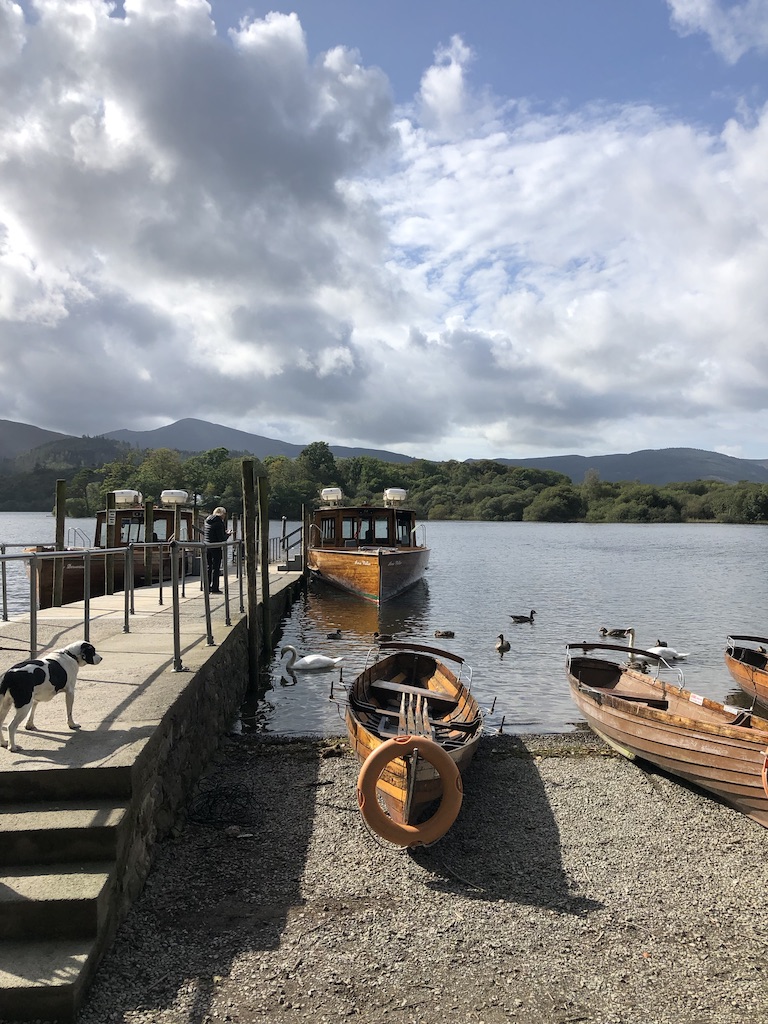
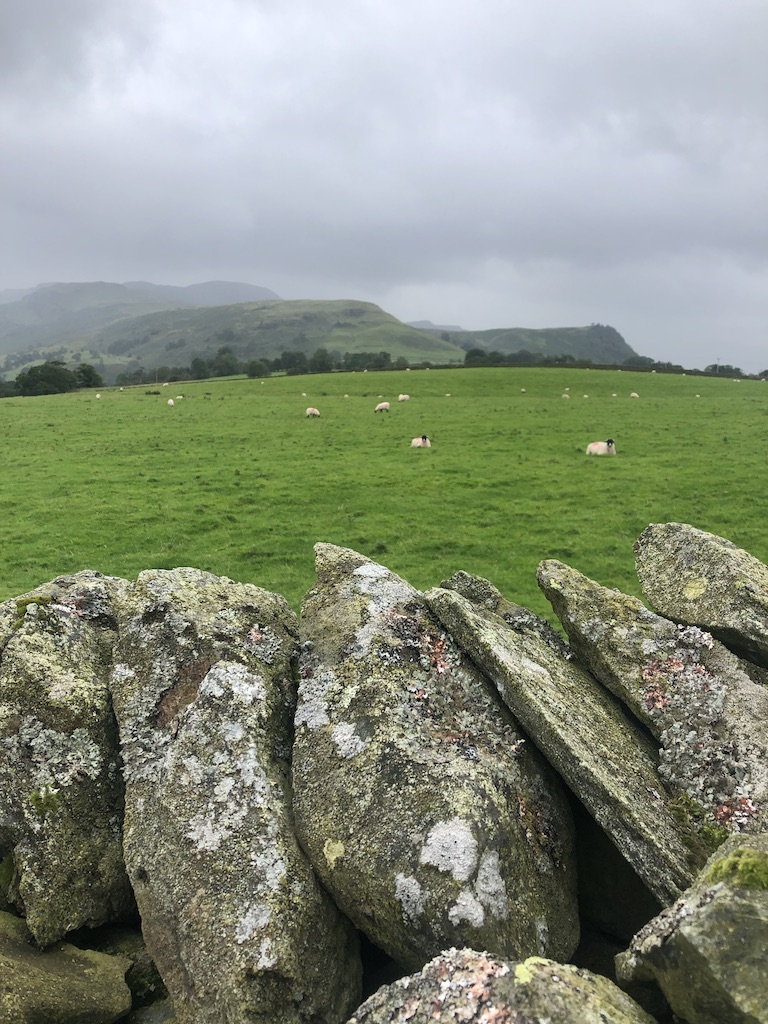
Next we headed up to Keswick in the northern end of the Lake District. A cute small town, that is very dog friendly, with tons of pubs, and a twice weekly market. The Lake District was our favorite stop on the trip. There is nice hiking, beautiful lakes, small towns, and again, lots of sheep. I get why Londoners come here every year for their holidays.
With huge views and lots of clouds, this is not a place suited for iPhone photos, so I struggled to get pictures that do the natural beauty justice. You will just have to trust that it is spectacular. It also rains a lot, and is technically a rain forest.
They have a Stonehenge-like stone circle outside Keswick. I’m standing with my back to it taking photos of sheep, which were more interesting than the rock circle.
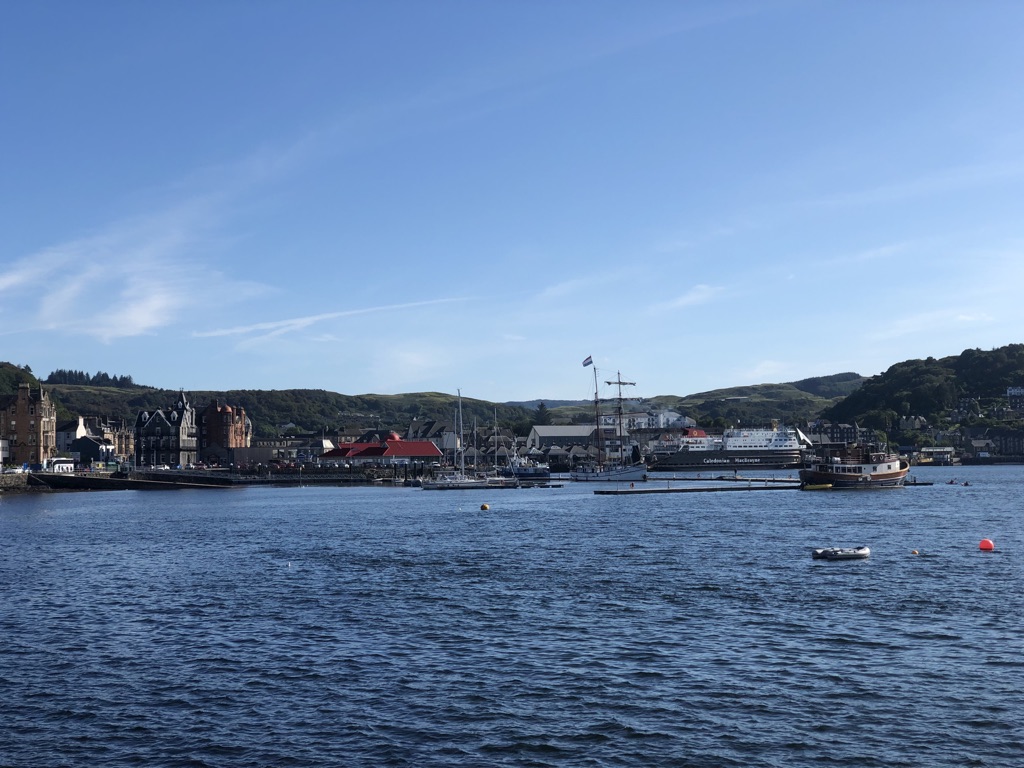
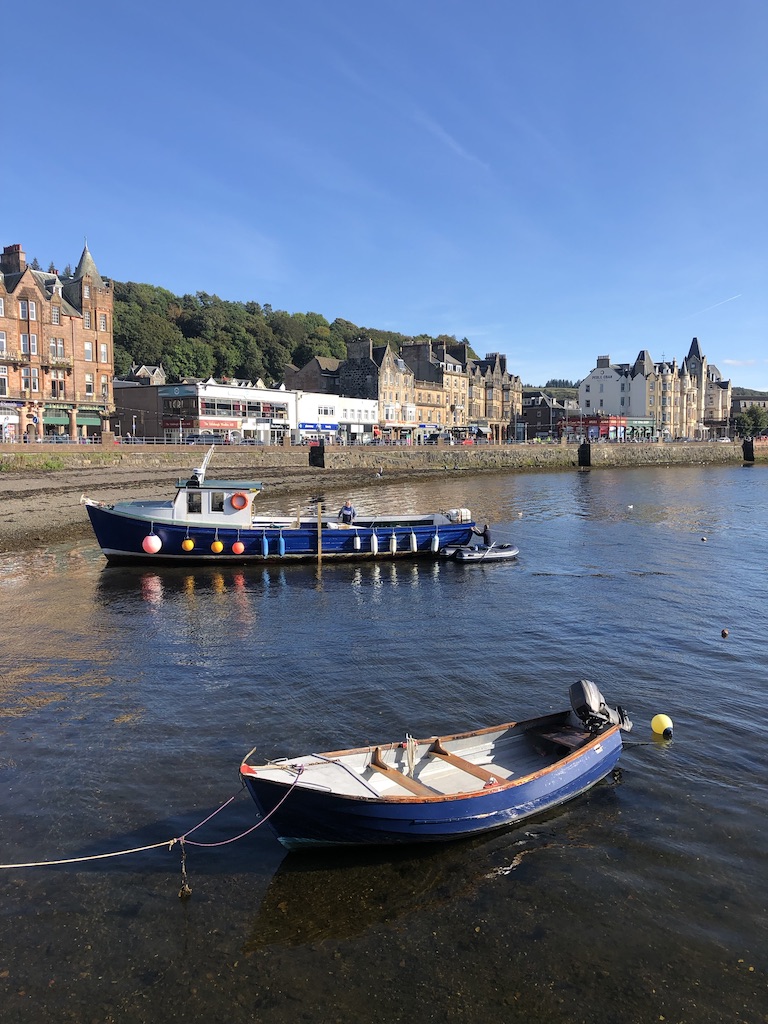
Oban (pronounced “Obin”), Scotland
Last stop on the trip was Scotland. We went to Scotland briefly with our friend Dave during the summer, but I wanted to see more Highland cows, so we made it our last stop. Oban is on the west coast of Scotland, and is the gateway to the Hebride Islands. There is one island in particular, Staffa, where puffins hangout during the summer months. Well, apparently they leave Staffa in early August, so we missed them . . . plan accordingly.
Regardless, we had a nice time and saw some seals and eagles. We ate good seafood, and toured the Oban Distillery.
Our very last stop was to see some Highland cows on the way to catch our flight out of Edinburgh. We fed them apples and grass in the rain, and drove to the airport.
Highly recommend a UK road trip. You get to develop a new skill – driving on the wrong side of the road – and it is really beautiful.
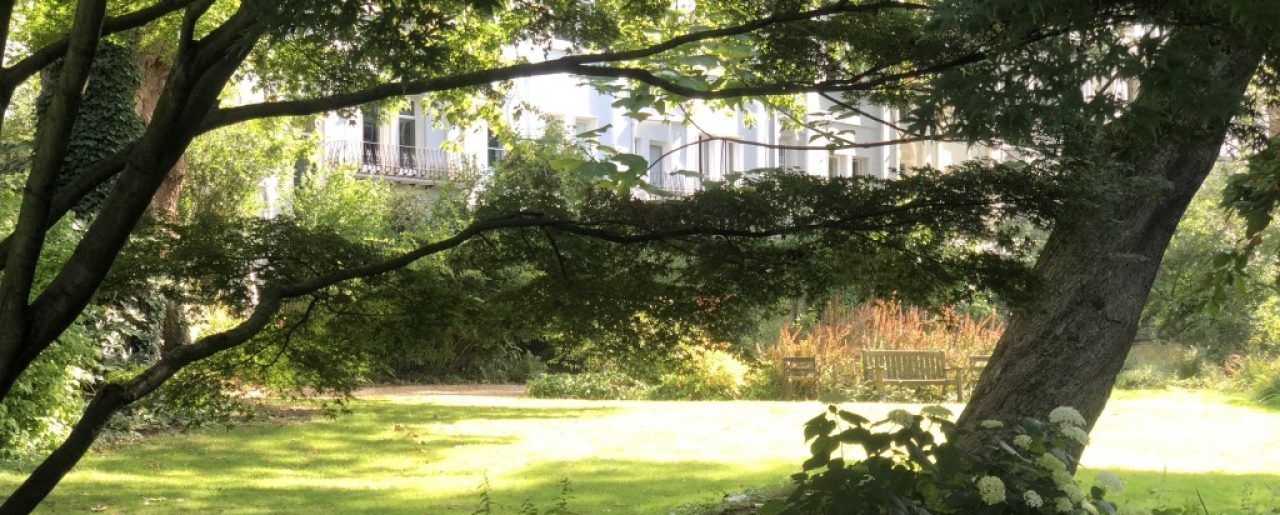
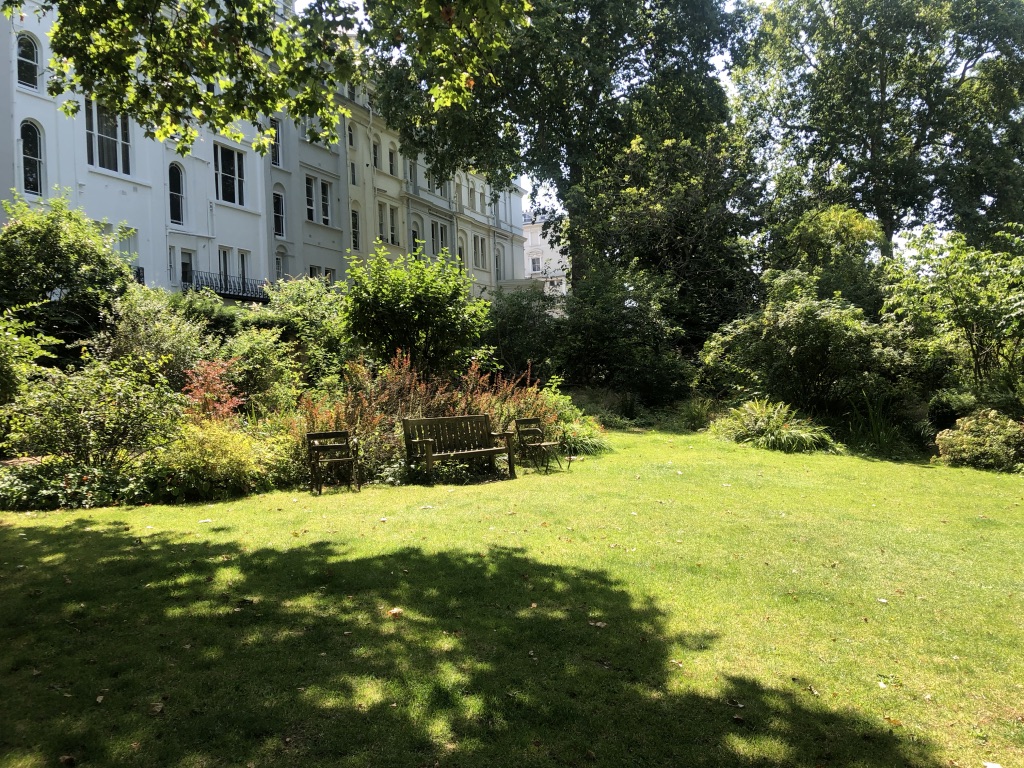
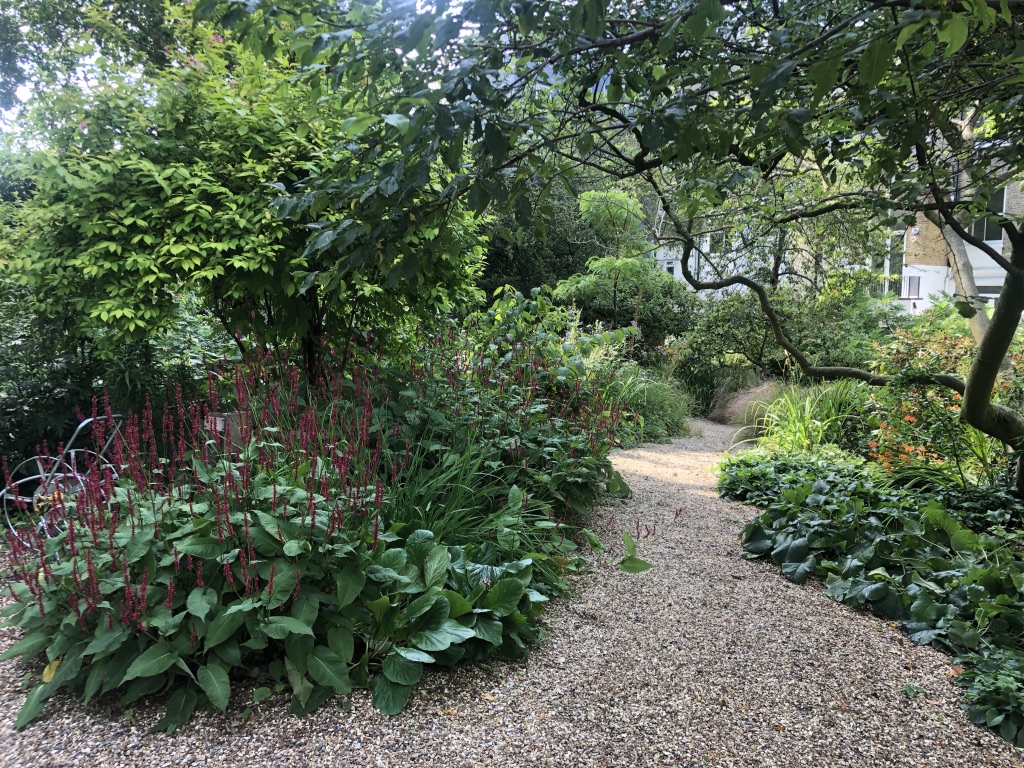
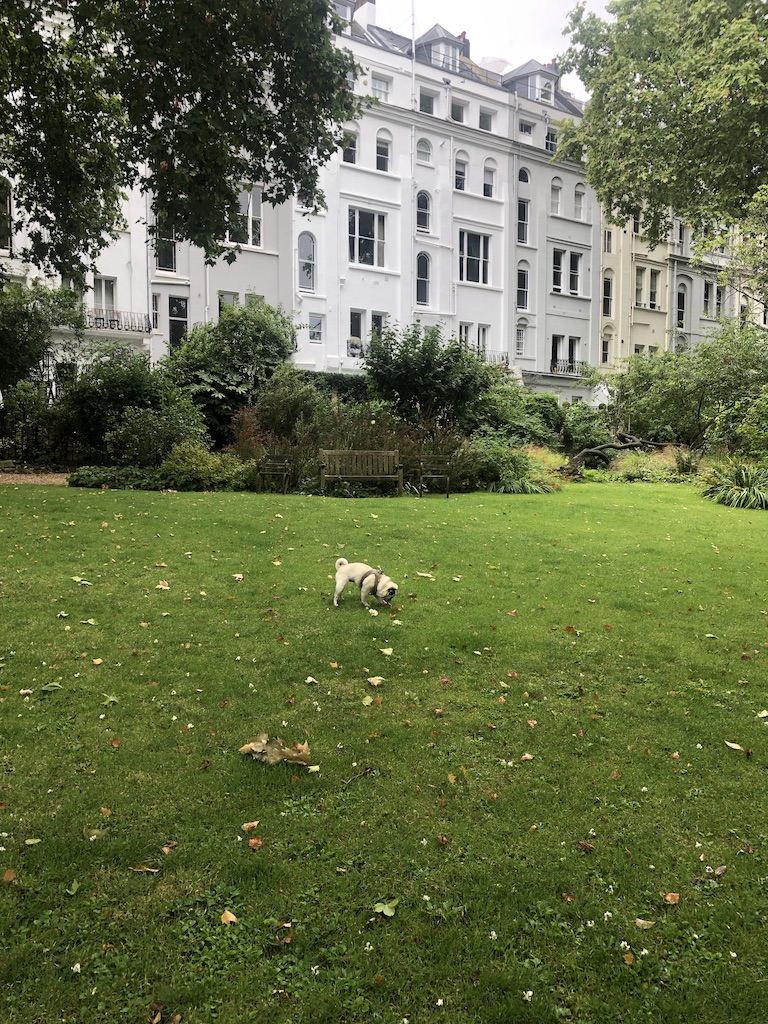
A private garden is a wonderful thing – a beautifully manicured space, that only you and your neighbors have access to. It’s huge – think a city block. It’s well cared for. And someone else mows the lawn.
London is full of them, but Notting Hill’s are special because the homes all back up to the garden (rather than facing the garden, which requires crossing a street to get in). So if you are lucky enough to live on the ground floor, you walk out your back door, through your own truly private patio, and from there, into the garden. For those of us living on the fifth floor, a key gets you in the gate.
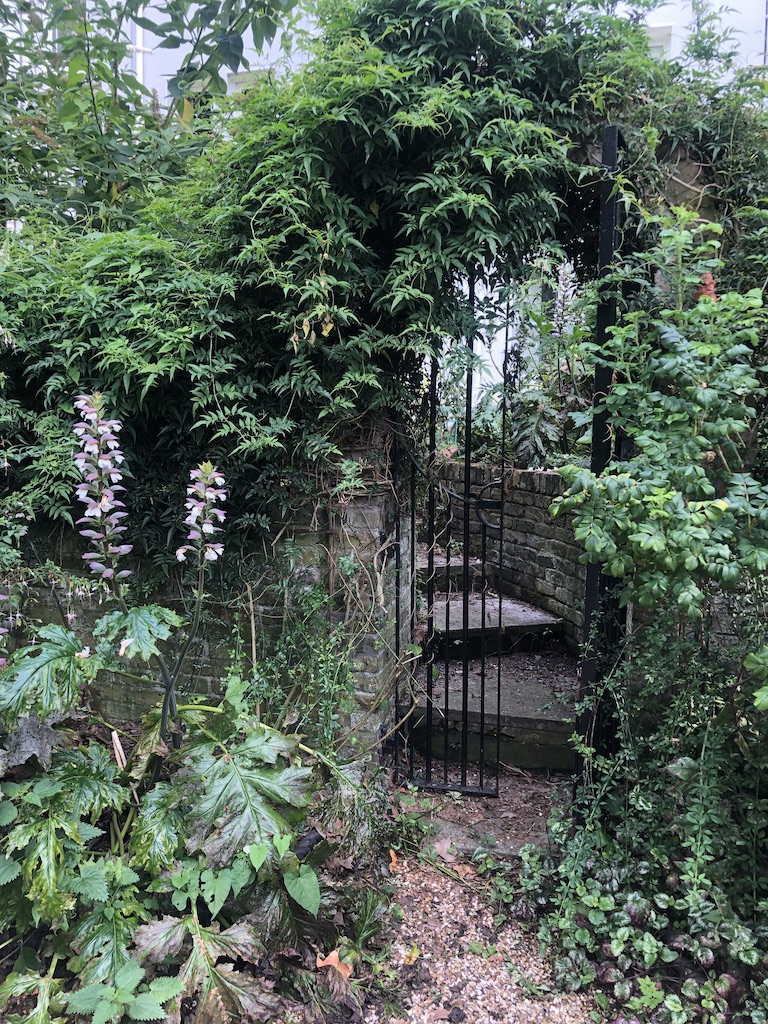
Not the gate Hugh Grant hops over, but similar.
We were lucky enough to get access to our street’s private garden, Arundel Garden, about half-way through our tenancy. And once we had the key, we did not miss a single day in that garden.
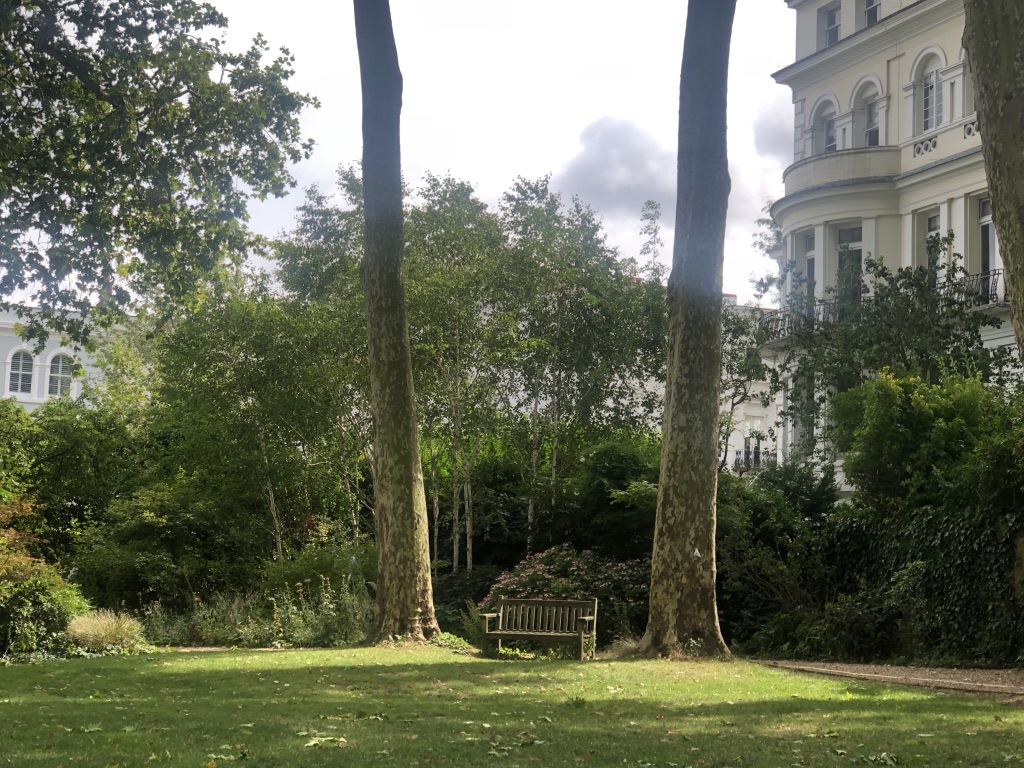
All the green spaces are private gardens.Our favorite bench.
It’s the perfect place for a pug walk, a picnic, to read a book, to stay cool on a hot day, to meet neighbors, and to have a drink after – what we have been referring to as – “work”.
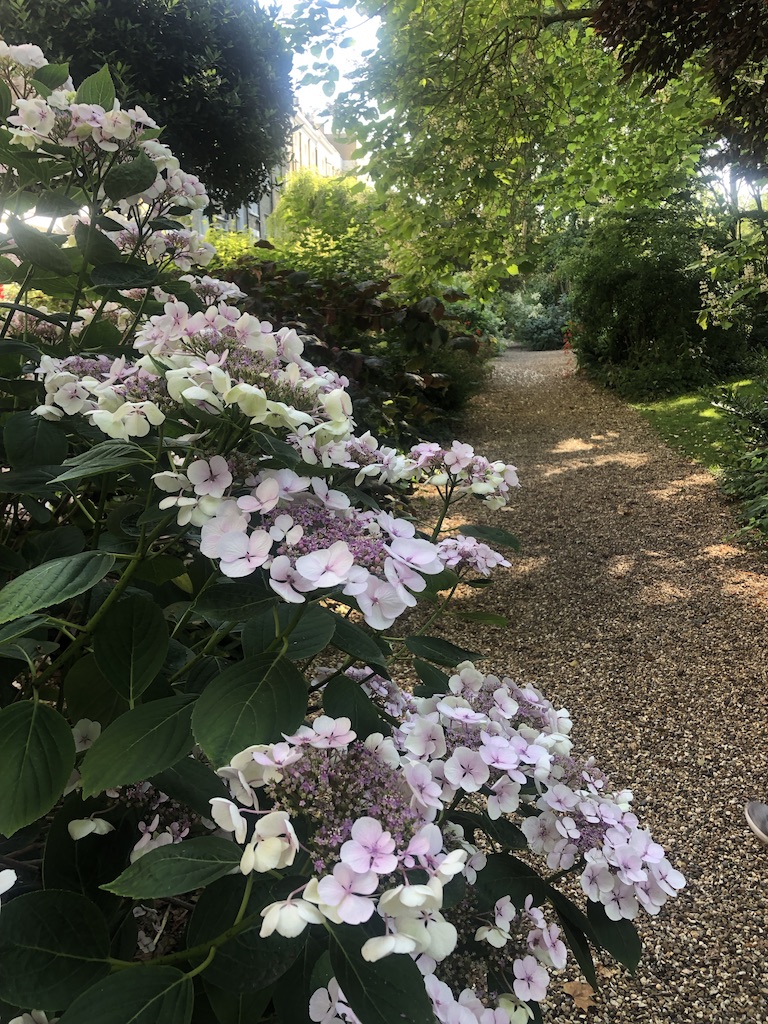
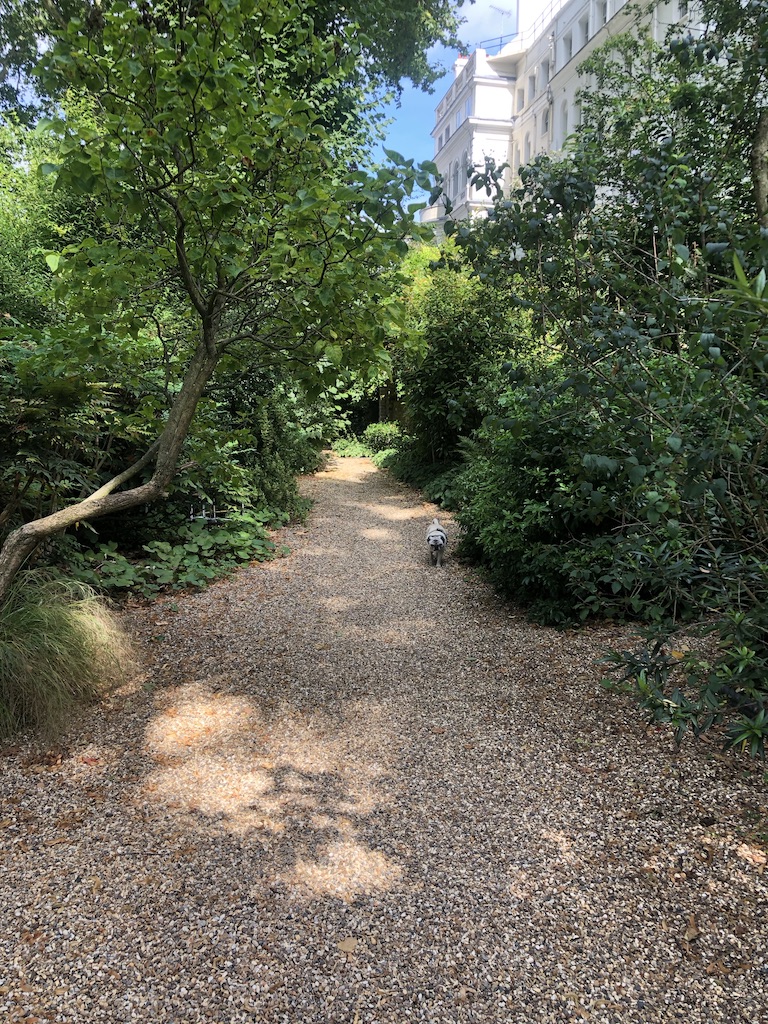
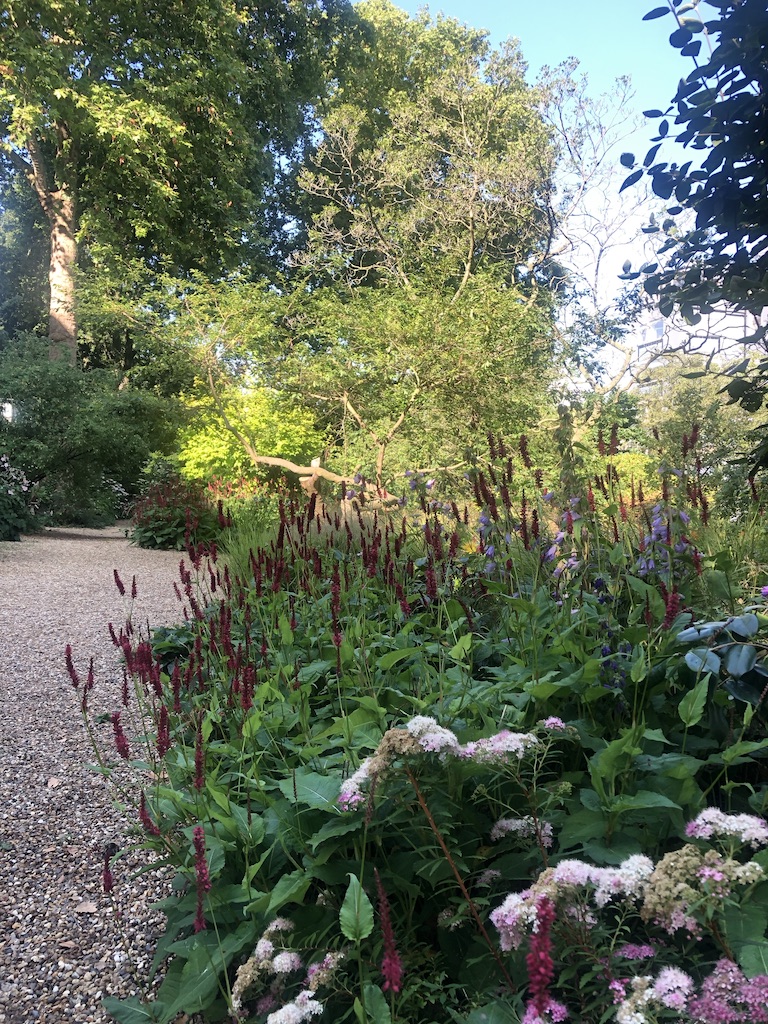
Path around the garden.
Spying into a patio from the garden.
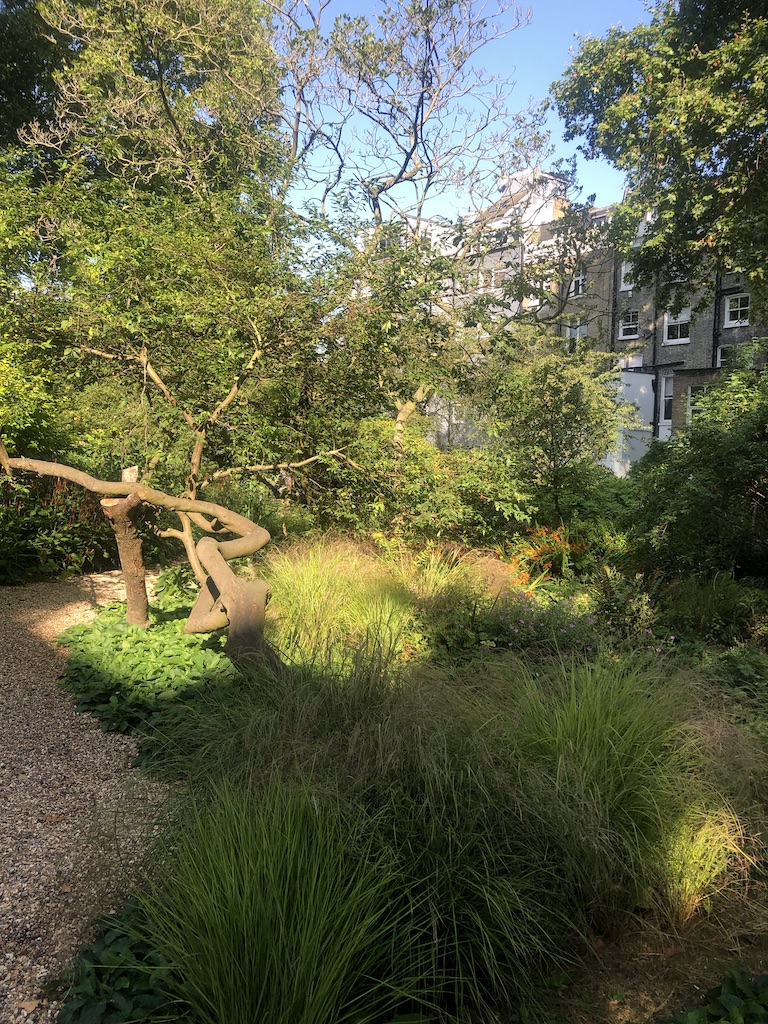
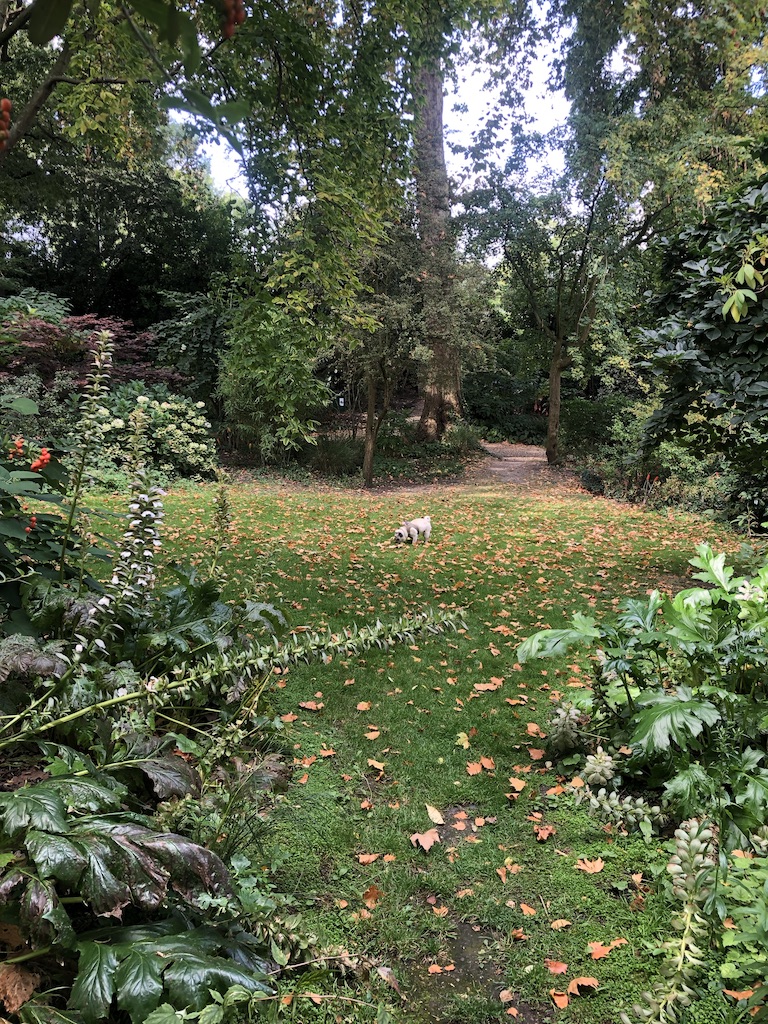
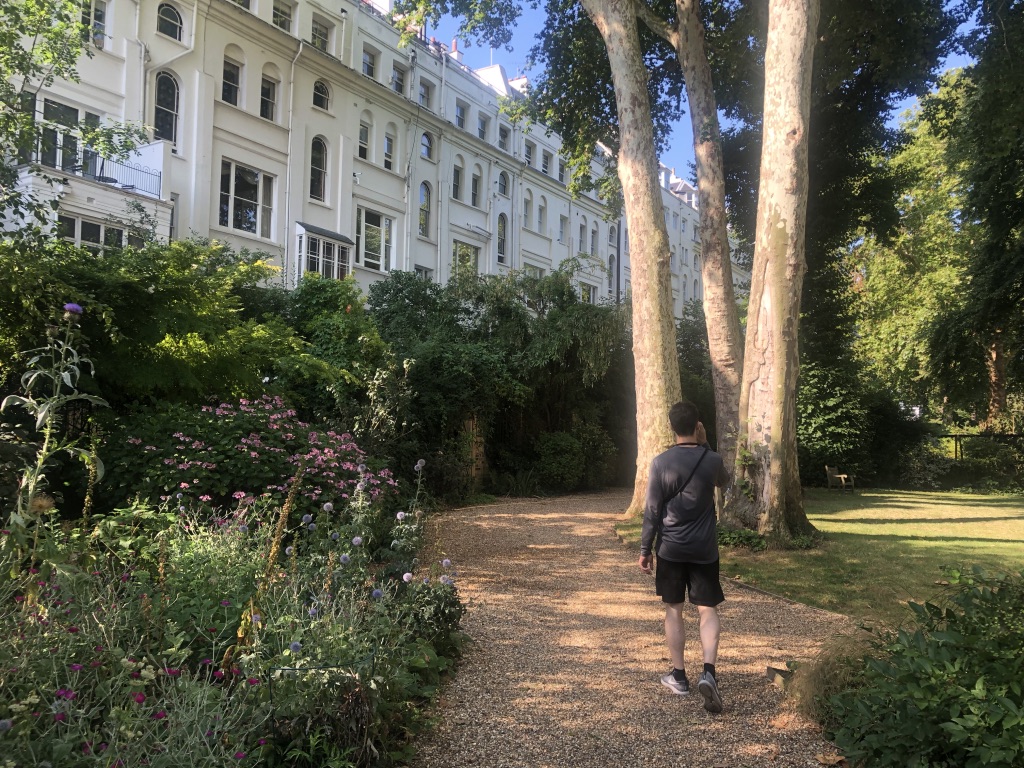
In my opinion, the garden is perfect. It’s broken into four large sections: three grassy areas, and a childs’ play area. The design provides all the best features of a garden – large open spaces for picnics and games, connected by winding paths for mystery about what’s around the corner. Around the edges of the garden is a wide gravel path that goes the whole way around if you are in a hurry. Which I never was. I took the winding paths. Here’s one of my favorite paths through a rose-covered trellis.
One of the open grass areas.
Not only is the garden beautiful, it provides a community, which was nice for us during our short time in Notting Hill. The garden was pretty quiet during the summer, but the same dogs walked through in the mornings, and neighbors came out on hot nights to cool off (no AC in London) and pick flowers.
We really saw the potential of the garden in the last weeks of August, when families returned from their holidays (our neighbors spent the summer in Spain and, more randomly, Lake Tahoe). The garden filled with kids, their parents, and pets. There are also events in the garden – early in the summer, Shakespeare in the Garden put on A Midsummer Night’s Dream.
I was sad to leave Notting Hill just when the garden started really buzzing with people. The garden was changing as well – seed heads formed, apples appeared, and the leaves started to fall off the huge London Plane Trees. I’m wishing I could watch the garden continue to change through its senescence over the next few months. I’ll just have to imagine it. And add a private garden to my wish list.
I’m back! No good excuses for not blogging for so long, but I’ll make them anyway. In short, we had a few weeks of lovely visitors, I took a lengthy wine class (which I had to study for!), we took a road trip around the UK, then flew to Bordeaux. I’ve got a lot of blog catching up to do! I’ll start with where we are now, and then over the next week or so, circle back through the UK fun I’m behind on.
Today is day two in Bordeaux. It’s 78° and wonderful. (We came from Scotland, where it was closer to 50°….)
Bordeaux!
Despite having never been here and knowing nothing about the place, except that we like the wine, spending September in Bordeaux was one of the only things that we knew we wanted to do before leaving on our trip. And here we are! We wanted to come because in 2017 we were in Burgundy for the grape harvest, which was so fun we thought we’d try to see it in another wine region. Bordeaux is really different from Burgundy. It’s huge. Well, 250,000 people huge.
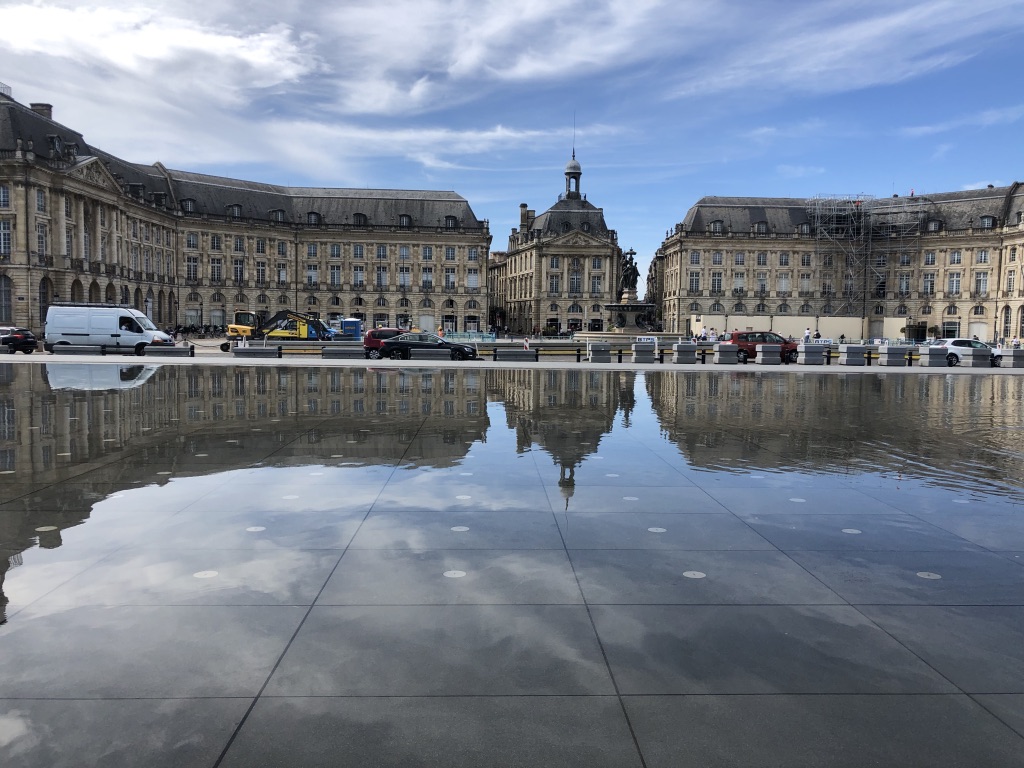
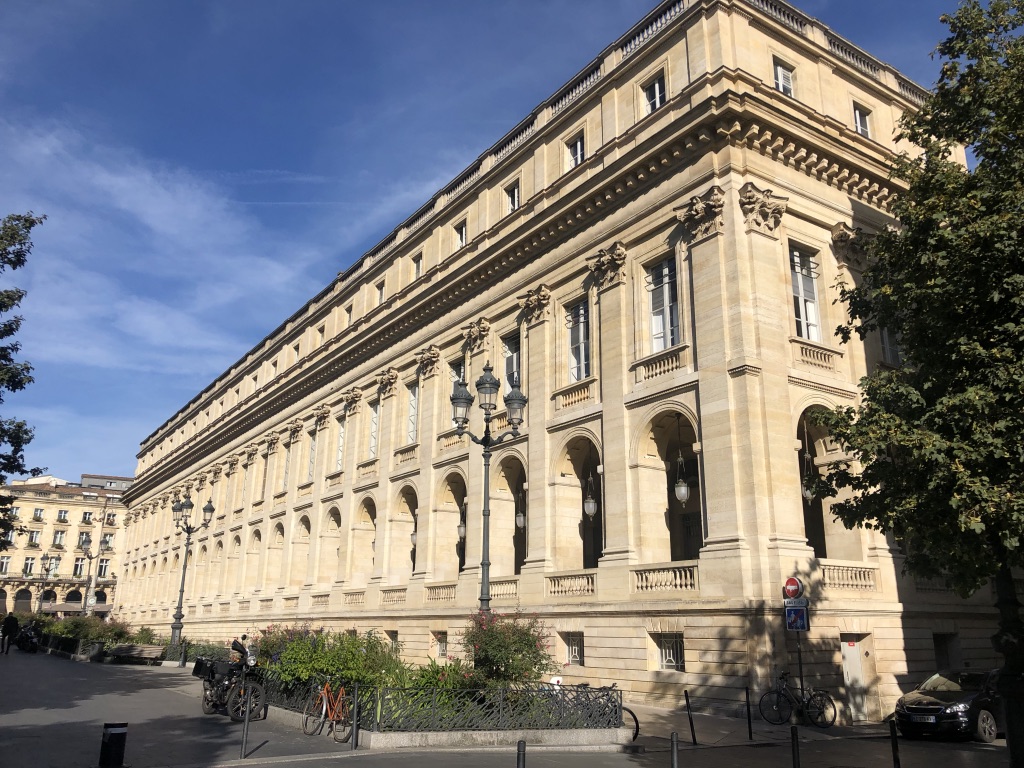
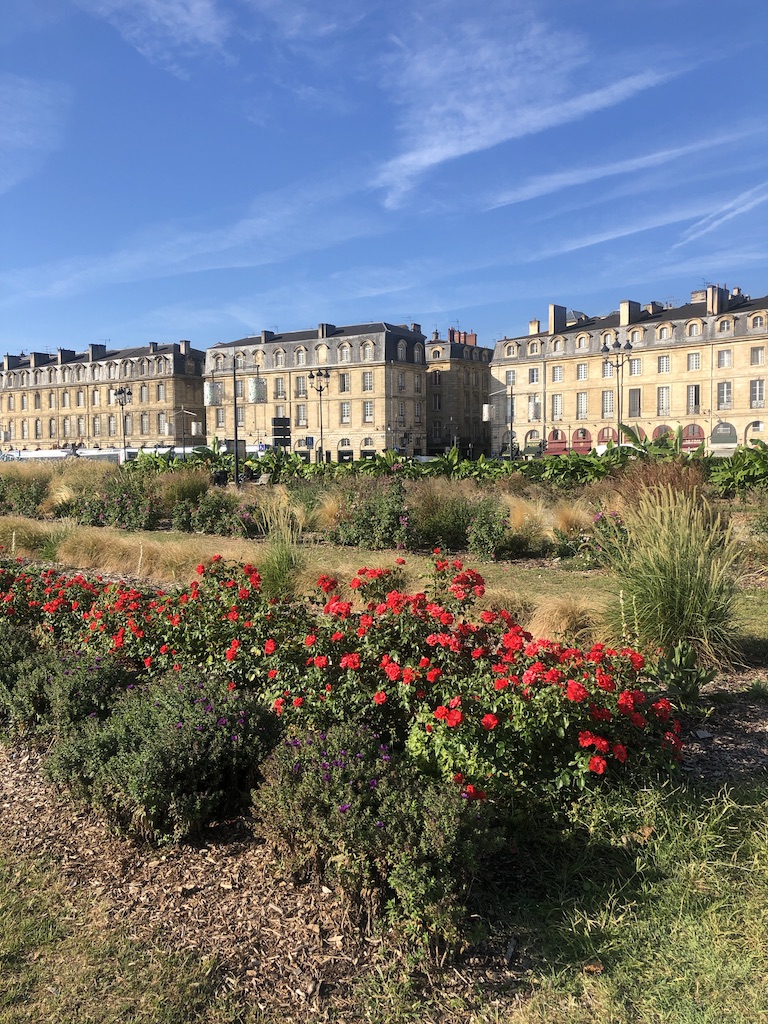
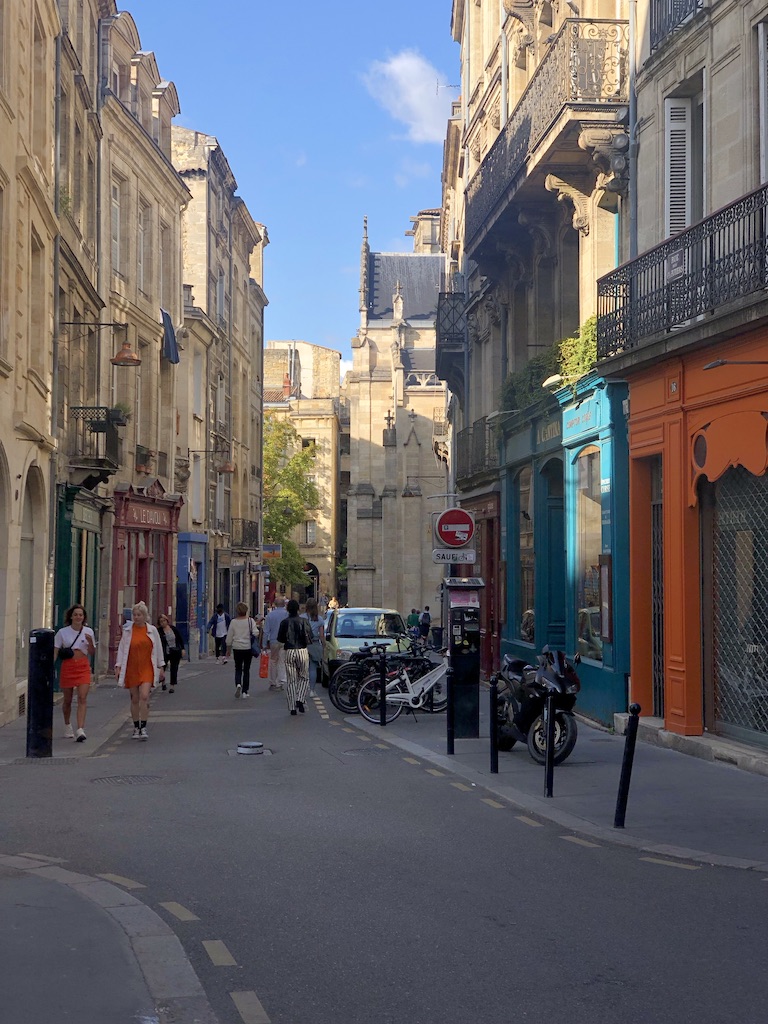
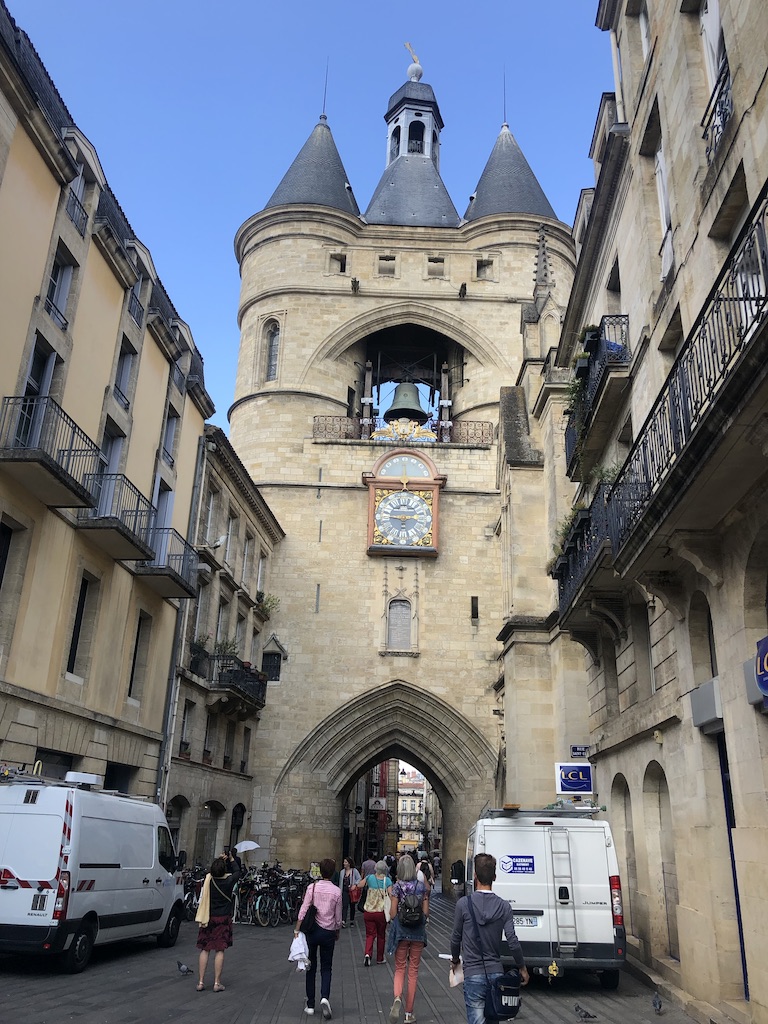
It looks a lot like Paris. A river runs through the City, there are places (plazas) everywhere, and the buildings all look the same. According to Dan, these guys had the the architecture first, and Paris was modeled after Bordeaux. It’s also nice and warm – it should be in the 80s most of the time we are here. Here are some scenes from around town.
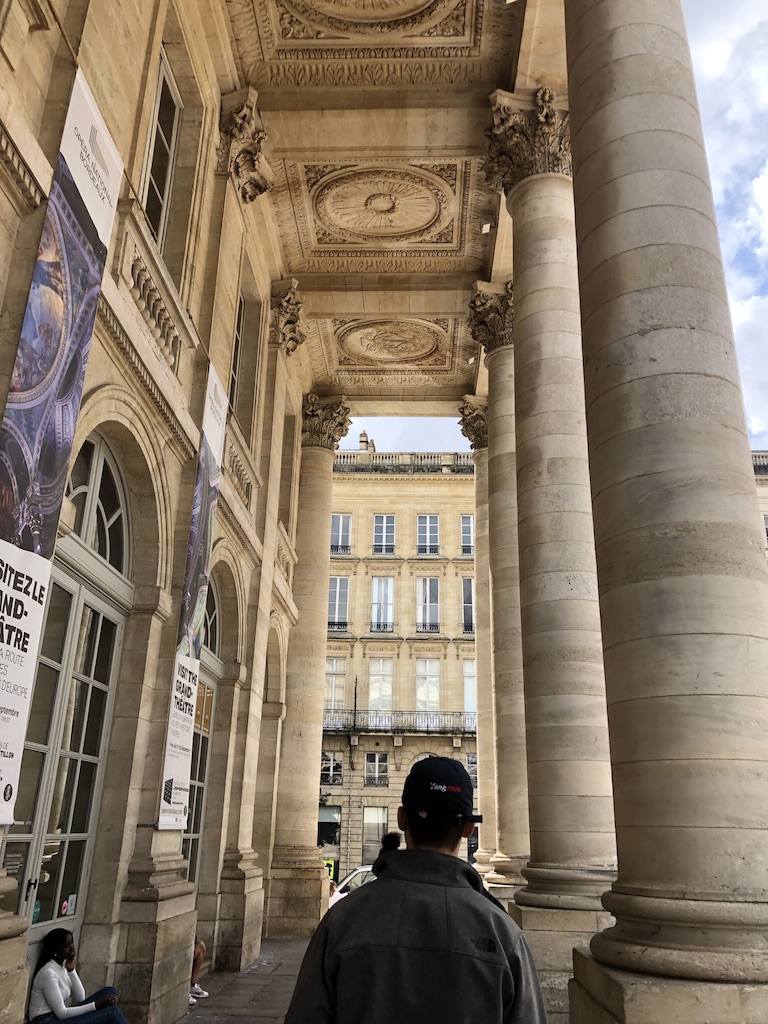
Opera
Boulevard along river
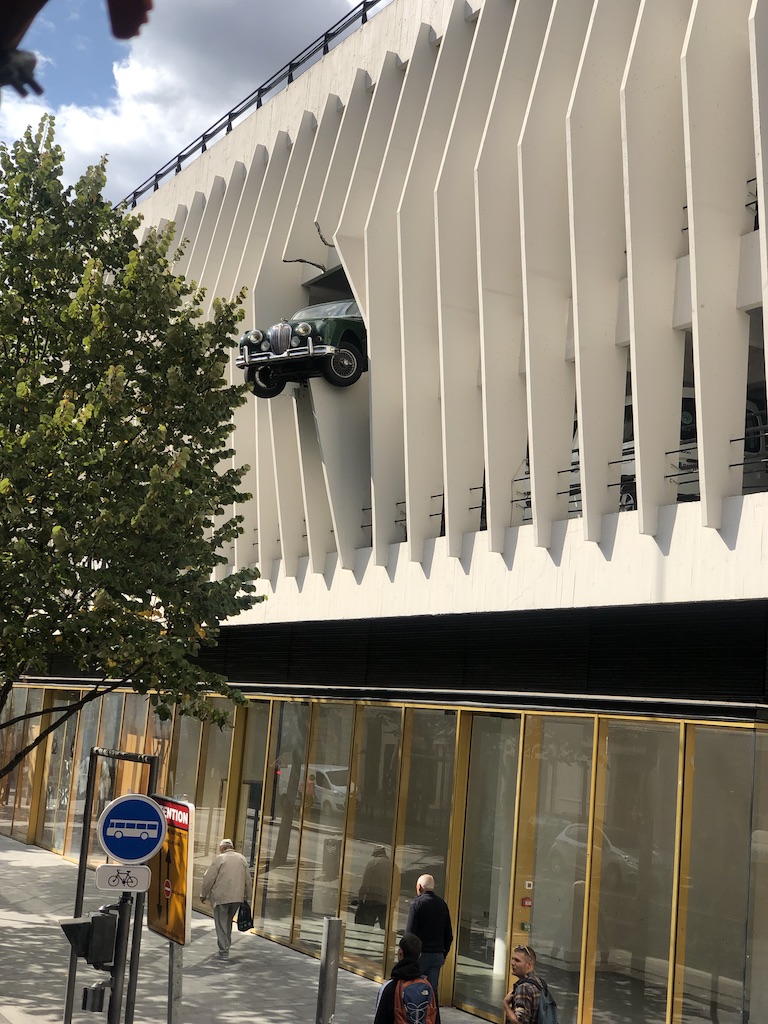
Strange. . .
Cruise ship came in last night with lots of British people on it.
There are disappointingly few patisseries here though . . . . Bordeaux is home of the canelé, a pastry that, luckily for me, is not one of my favorites. It would be difficult if this town was filled with the St. Honore. But, since I’m here, I might as well search out the best canelés and see if they can change my mind. More on this after I do some canelé research.
Canelés
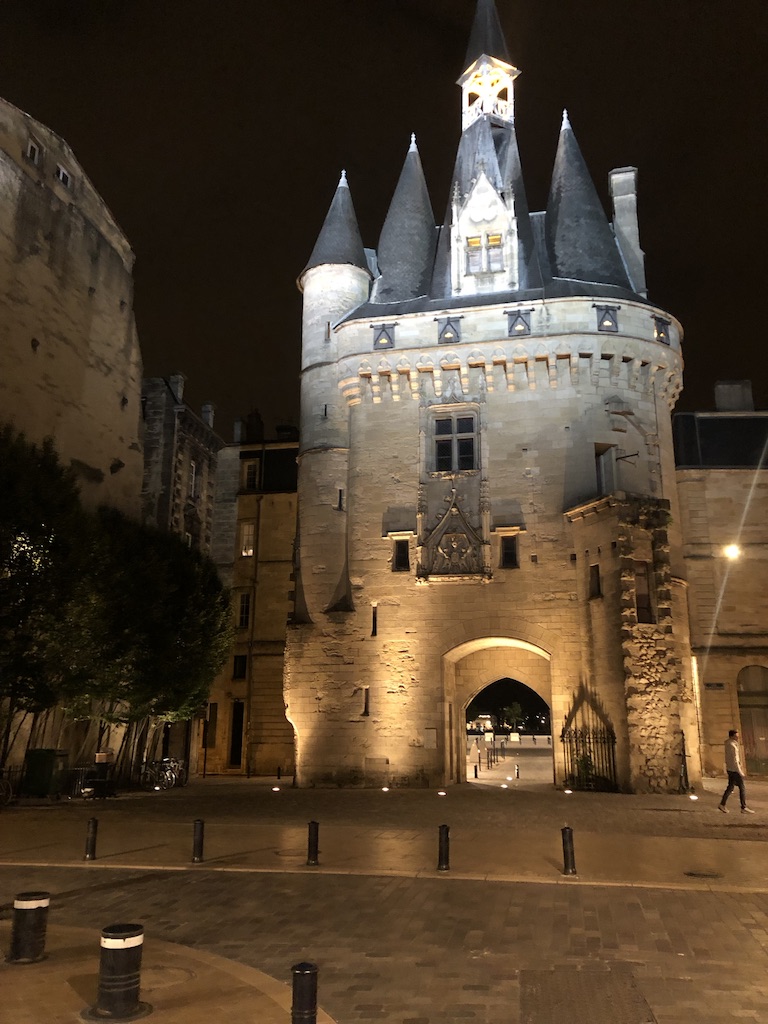
Our flat is at the very top of a beautiful building that looks out onto Place du Palais. A lovely little square, with a cool gate/castle at one end, and the Garonne River just beyond that.
This is the gate/caste – Porte Cailhau – looking great all lit up. This was originally the entrance to a caste, and was built in 1493.
Views from our flat below. 93 steps to get up to here! That is by far the most yet on this trip (at home we have 53, which I will never complain about again). But look at the view!
We’ve decided we’d like to live in the flat across the Place. The one with the balcony. It’s probably only 20 stairs to get there.
























 Unemployed and Traveling